Facebook

Only the NSA and you knows... by Richard

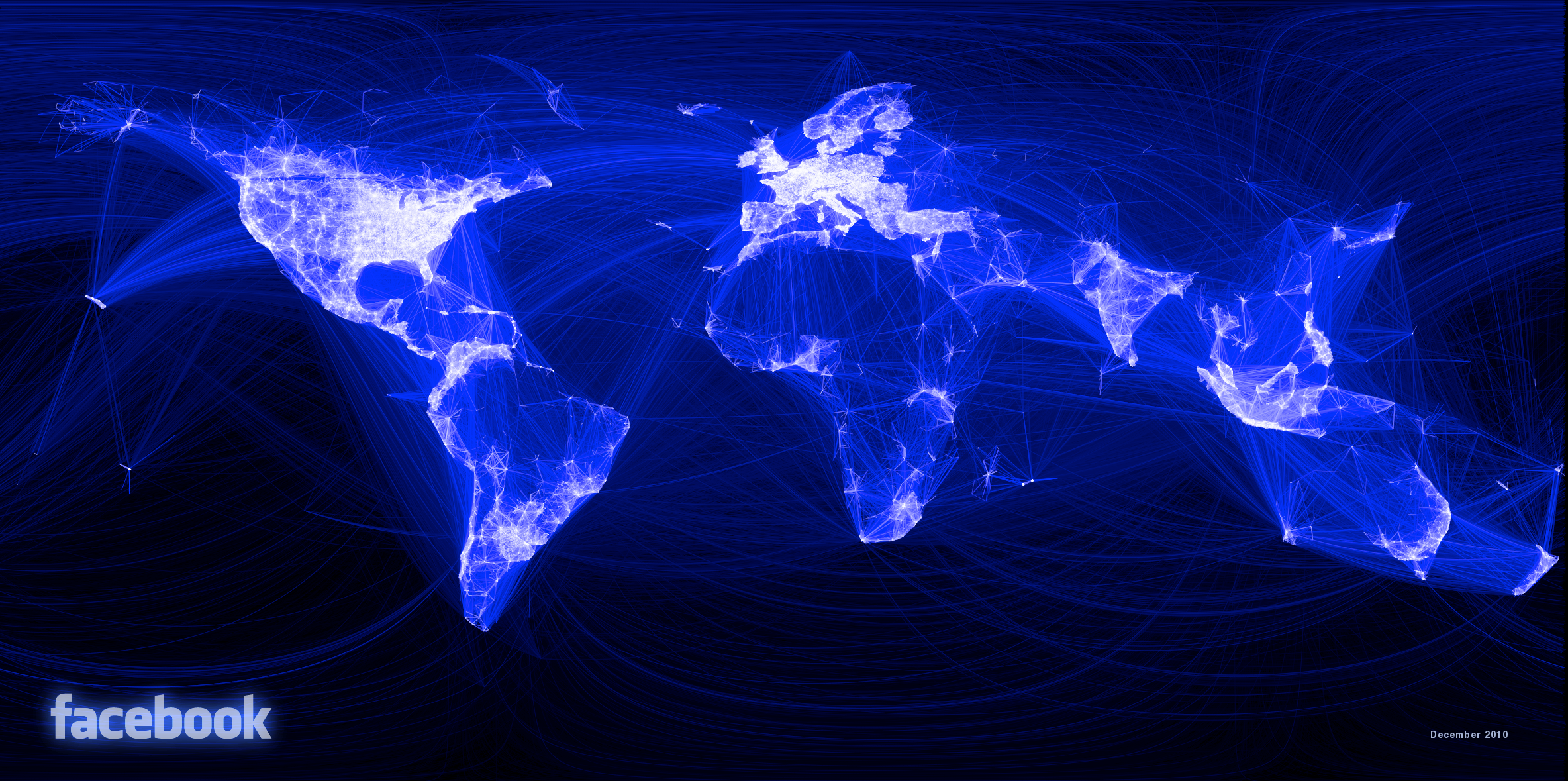
Every time you log in to Facebook, every time you click on your news feed, every time you like a photo, every time you send anything via messenger, every time you use your credit card, you add another data point to the galaxy they already have regarding you and your behavior.

Apple and Google collects various user data including search history, location, and voice searches to help improve its services and provide relevant ads.

What’s interesting is the notion that Facebook or Google might be able to paint an extraordinarily accurate pointillist picture of you, with all the data points you give them! Your phone can tell whether you’re depressed. Algorithms are already being used to judge our character and can determine whether your relationship or job situation is in trouble based on your collective social graph.

And they can filter what you see or should see, of course. Like ‘everyone will know’ described in a recent article in the Washington Post.

Did you consider the possibility that human data will in a near future act as an X-ray revealing things about yourself that you thought was your secret or clearly didn't know? Which in turn raises fascinating and disturbing ethical questions, what if Google's extended neural networks predict, based on your behavior, that you’re going to commit an attack of some kind? What do you think NSA or similar organisations will do...?
The capitalization is now around 190 billion USD by Richard

Recently did Facebook's share price hit an all-time high, their market capitalization is now around 190 billion USD.

Also recently did Facebook pick PayPal’s president David Marcus to lead Messaging Products.

And with a Messenger that hit 200 million active users during Q1 2014, and users now sending 12 billion messages per day, Facebook plan to monetize it big times with Payments on Messenger.

So with an economy of a small country and a population of a large one, I guess we will soon see Face-money.

How green is IT? by Richard

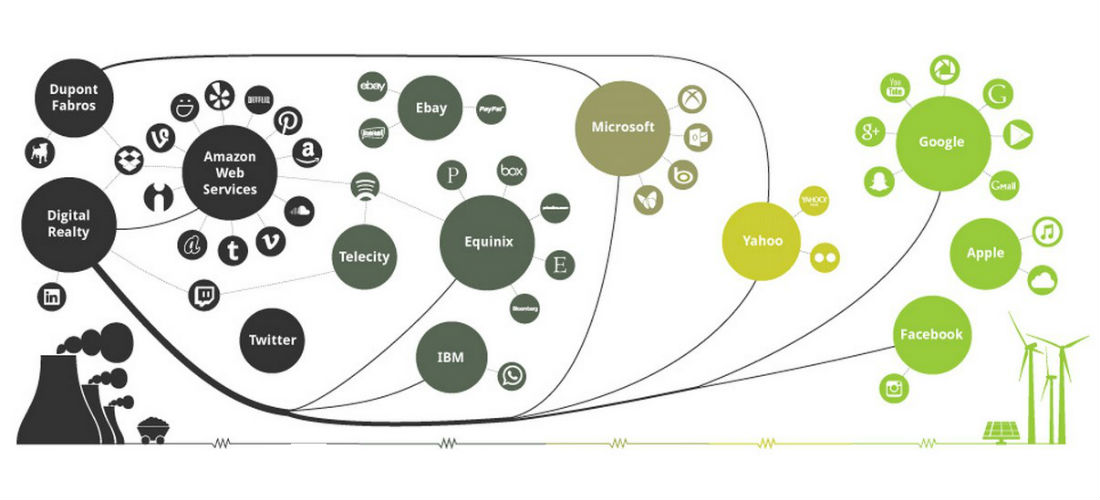
You can look at the massive transformation of the Internet now, through the demand of clean energy. The internet is one of the most important things created by humanity. It's like human civilization giving itself a nervous system such as Google, investing substantially in green solutions. By moving the IT department to the cloud one can save up to 87% of IT energy! But since all that internet traffic ends up in the massive data-centers of a few big companies, Greenpeace has released a interest report that shows how companies are creating the green internet...

It's interesting to notice who the bigger winners and losers are

It's interesting to notice who the bigger winners and losers are

In theory, over time the new more efficient equipment’s energy savings of for example, a cellular base station can repay the energy debt embodied in manufacturing that hardware.  But the odds are high that the new equipment will end up being obsoleted and replaced long before the operational efficiency pays for the manufacturing energy debt.

Estimated 2.5 billion people around the world are now connected to the internet, an internet that has become a foundation of the global economy!

Download Greenpeace report

Facebook buys Oculus so You can have virtual Sex by Richard

But he will start with virtual- shopping and classrooms.

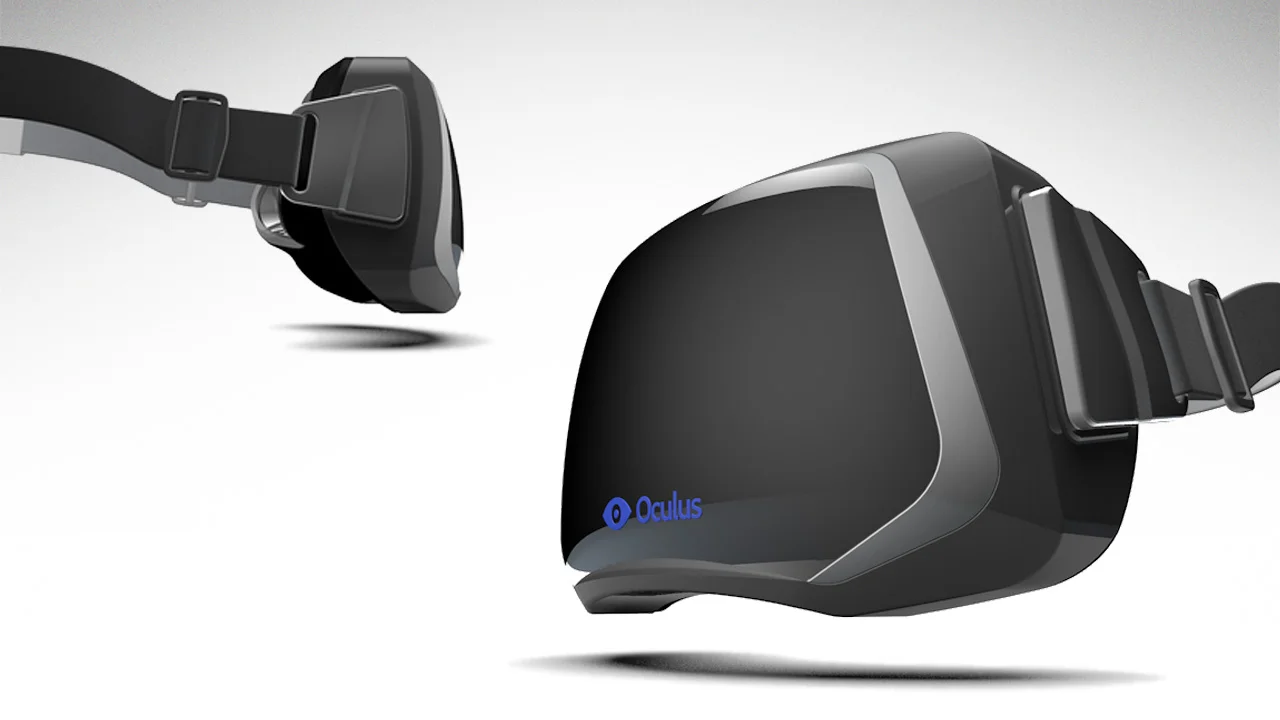
Facebook is buying Oculus VR, a startup that makes virtual reality headsets, in a $2 billion deal. That’s a hefty sum considering that the company has not yet released a consumer-ready product.

While Oculus is today focused on gaming, Zuckerberg gave a few examples of other uses the technology could have in the coming years. He described being able to virtually sit court side at a game, communicate face-to-face with a doctor, or shop in a store while feeling like you’re actually there.

Facebook’s Mark Zuckerberg says the virtual reality technology he bought will offer more than just gaming. The device is nearly impossible to describe. It makes you feel like you're truly immersed in a virtual environment. It's one of those things you have to try to fully understand.

Yes, Facebook's mission is to make the world more open and connected. Zuckerberg said in a statement. “Oculus has the chance to create the most social platform ever, and change the way we work, play and communicate.”

big data meets psychology by Richard

As the results of Sweden's largest Facebook study, a project led at the University of Gothenburg, shows that people with low income and low-educated individuals spend more time on Facebook and we may have lower self-esteem also.  Yes, here we are you and me :) 

Women are generally more active than men on Facebook. On average, women spend 81 minutes per day Facebooking, whereas men spend 64 minutes. One of the theories behind the discontentment could be the finding that women tended to write more about their thoughts and feeling, while men spent more time provoking others.

When researchers ask subjects to rank the importance of why they use Facebook, the top three reasons were: to maintain contact 88 %, maintain their network 83 % and read status updates 77 %.

Other statistics from the study:

  • The average user spends 75 minutes per day on Facebook
  • The average user logs on to Facebook 6.1 times per day
  • 70% log in every time they start their computer or web reader
  • 26% feel ill at ease if they do not get to log in regularly
  • Facebooking is primarily a habit among young users
  • Older Facebook users use Facebook to get to know more people
  • 67% of young users use Facebook to kill time*
  • 38% share negative information in their status updates
  • Women write more about emotions and relationships
  • One third of the men try to provoke others on Facebook, which is twice the figure for women
  • More than 50% of the users broadcast information and knowledge via Facebook
  • Women who use Facebook more are also report feeling less happy and less content with their lives
  • One quarter of the respondents brag on Facebook
Learn More

A other study by the University of Pennsylvania researchers analyzed Facebook status updates of 75,000 volunteers have found an entirely different way to analyze human personality, according to a new study published in PLOS One .

The word clouds allowed the researchers to generate new insights into relationships between traits and language used. For example, participants with the most emotional stability refer to sports much more.

And we are concerned about what NSA and other Gov. agencies knows about us! Come on, we are all in the open, already...

Learn More

Facebook "Privacy" by Richard

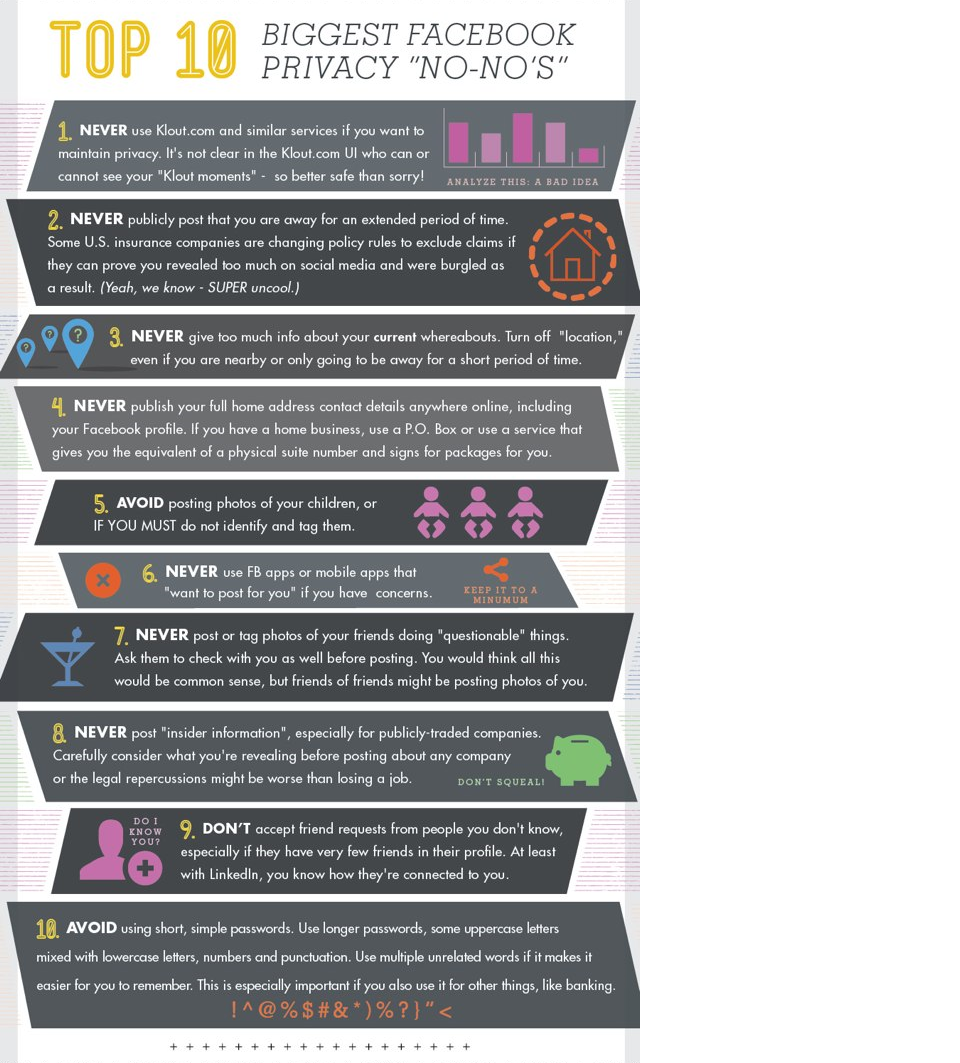
Facebook privacy changes so get a good look on your account's settings and set these privacy settings:

1. Not all photos adhere to your privacy settings.
2. Your comments are searchable.
3. Your profile will appear in Facebook searches.
4. You can prevent unwanted friend requests.
5. Your hidden photos appear in searches. 
6. Shared album creators determine privacy settings.
7. Your Facebook apps may cause problems.
8. Location tags on photos have the same privacy settings.
9. Control profile tags.

fb.png

Nestlé create an "Social War-Room" by Richard

The worst thing to do when your customers are upset and nervous is to cut off communications. It’s the same as telling people you don’t care!

Nestlé launched in 2012 its "Digital Acceleration Team (DAT) where fifteen people responsible for monitoring the evolution of the Nestlé brands on social networks. The team has its proper TV studio to respond to imminent threats on their brands.

Nestlé has not forgotten how in 2010 the company found themselves confronted by Greenpeace. At that time Greenpeace produced a video available on Youtube and Facebook in a global campaign to accuse the use palm oil in Kit Kat bars production. With eminent threat of destroyed the natural habitat of orangutans.

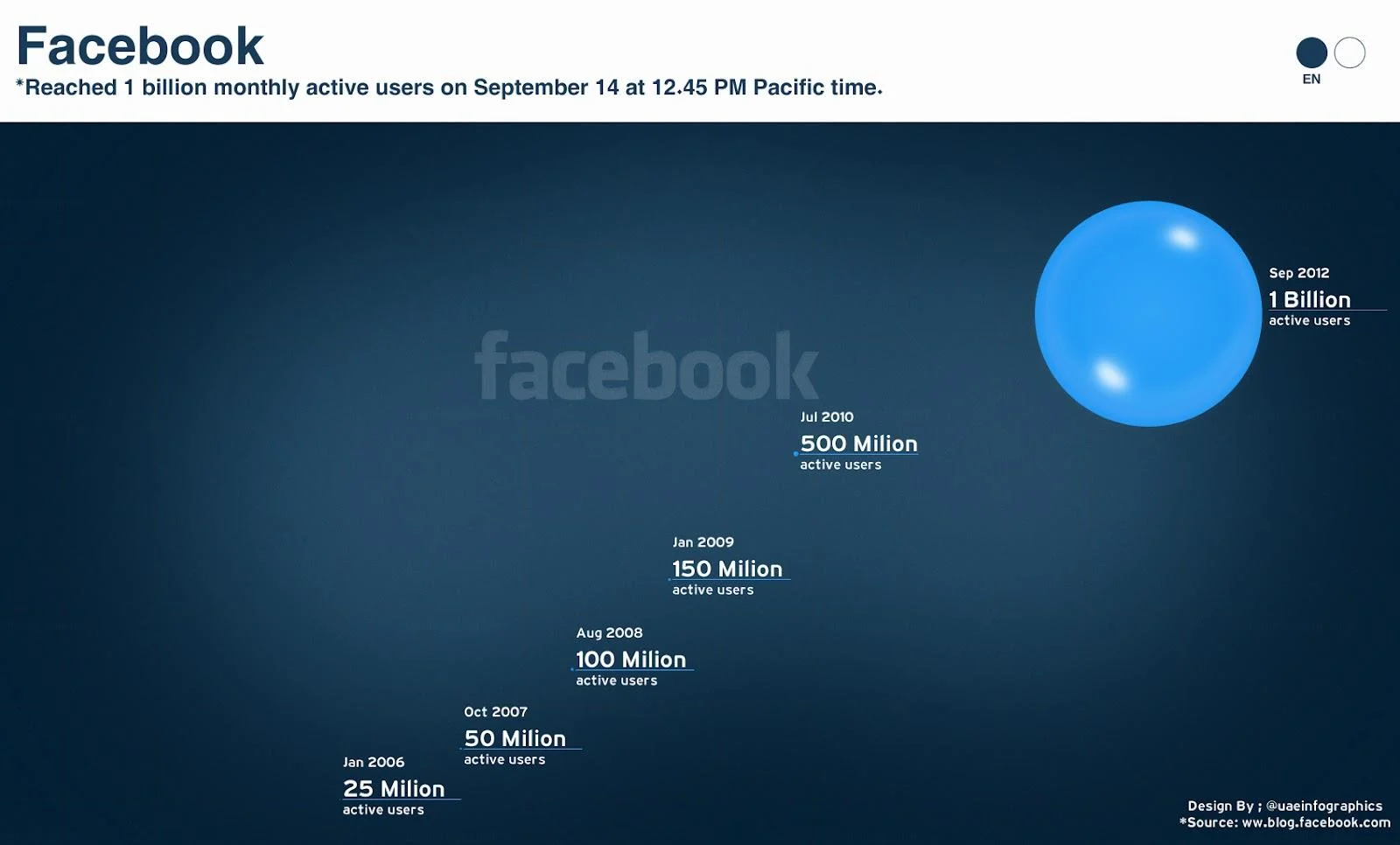
Facebook has more than 1 billion monthly active users. Twitter has 500 million. YouTube has 1 billion active users and 4 billion views a day. No matter what product or service you’re marketing, your audience is on social media.

Today Nestlé works tight with the Silicon Valley giant Facebook, Google, Twitter or Instagram to build sophisticated strategies of defense from "Nestlé's mission control".

The Digital Acceleration Team gets involve before product launches, to implement and monitor the impact of the brand's image and its marketing effects on viral networks.

Such a command centers can listen to conversations in dozens of languages to identify customer support issues, engage with customers, and influence product development.

So will You get your Social War-Room to make better decisions, in a real-time marketer and keep up with consumers who are moving at the speed of social? 

nestle.jpg

Internet access to everyone with internet.org by Richard

Facebook founder and CEO Mark Zuckerberg has announced the launch of Internet.org, an initiative to bring internet access to everyone on the planet. Zuckerberg published a mission statement accompanying this launch, addressing some of the issues that Internet.org will have to face.

Zuckerberg hope this rough plan can serve as a blueprint for some of what we’ll all need to do to connect the next 5 billion people.

Types of Facebook User by Richard

Most peoples as his or her own social media style, but there are definite patterns in Facebook user behavior. For businesses hoping to utilize Facebook's advertising potential, identifying and targeting specific types of users can help narrow more meaningful audiences.

This infographic from Optify highlights everyone's favorite Facebook users, from the Gamer to the Stalker and some in between.

Google+ or facebook by Richard

The other day I compared an identical “status/posts”, made at the same time by Arianna Huffington on Facebook and Google+.

  • On Facebook Arianna had 961 “like” and 37 comments out of 1.6 million followers
  • On Google+ Arianna had 61 “like” and 9 comments out of 2.2 million followers

Clearly facebook has a better penetration or is simply more often visited. What do you think?

Meanwhile ​as advertising becomes increasingly digital, publishers are demanding statistics to help them determine the success of their ads. Fortunately for advertisers, Google and Facebook are battling to offer their ad clients the most useful measurement solutions, improving available metrics and tools while they're at it.

Data and graphic from http://janrain.com