The Walkman by Richard

On July 1, 1979, Sony introduced the first Walkman and was sold for around $150.00, total sold a cumulative 200 million units. Sony predicted it would sell about 5,000 units a month, it sold more than 50,000 in the first two months. Its release changed the way I, we listened to music, allowing the world to hear the favorite songs everywhere.

walkman.jpg

Masaru Ibuka, Sony's co-founder, traveled often for business and would find himself lugging Sony's bulky TC-D5 cassette recorder around to listen to music. He asked Norio Ohga, then Executive Deputy President, to design a playback-only stereo version, optimized for use with headphones. Ibuka brought the result — a compact, high-quality music player — to Chairman Akio Morita and reportedly said, "Try this. Don't you think a stereo cassette player that you can listen to while walking around is a good idea?"

On June 22, 1979, the Sony Walkman was launched in Tokyo. Journalists were treated to an unusual press conference. They were taken to Yoyogi (a major park in Tokyo) and given a Walkman to wear.

Mid July my father brought me one, probably one of the first in Europe, with a demo-cassette containing all kinds of sound effects favoring stereo sound, including the passage of a jet, from left to right, making most people ducking down.


A T-shirt made from superthin carbon fibers by Richard

Until now, carbon fibers have not been widely used in clothing. Vollebak, makers of the Graphene Jacket, created a T-shirt made from super-thin carbon fibers usually reserved for the world’s fastest cars.

The British Ministry of Defense patented the production of carbon fibers, leasing it out to Rolls-Royce to make jet engines.The T-shirt, which costs $110, looks like a regular sporty base layer, with a stretchy, moisture-wicking exterior. It feels cool, smooth, and soft to the tough. But it’s much tougher than a T-shirt made of nylon or polyester. In fact, carbon’s atomic structure is five times stronger than that of steel. Each shirt is woven with over 120 meters of carbon fiber that is combined with elastane, which gives it four-way stretch.

carbon-t-shirt-2-2752-2400x1047.jpg
dvp.jpg

Nakagin Capsule Tower in Tokyo by Richard

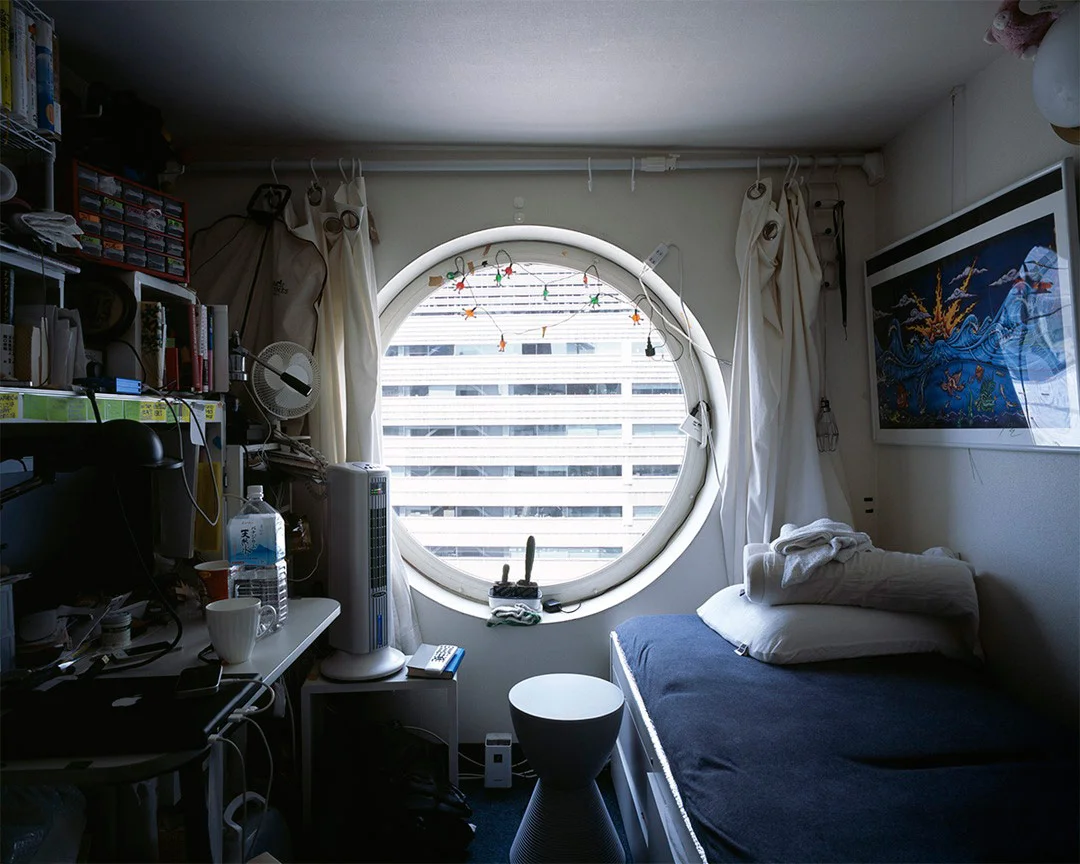
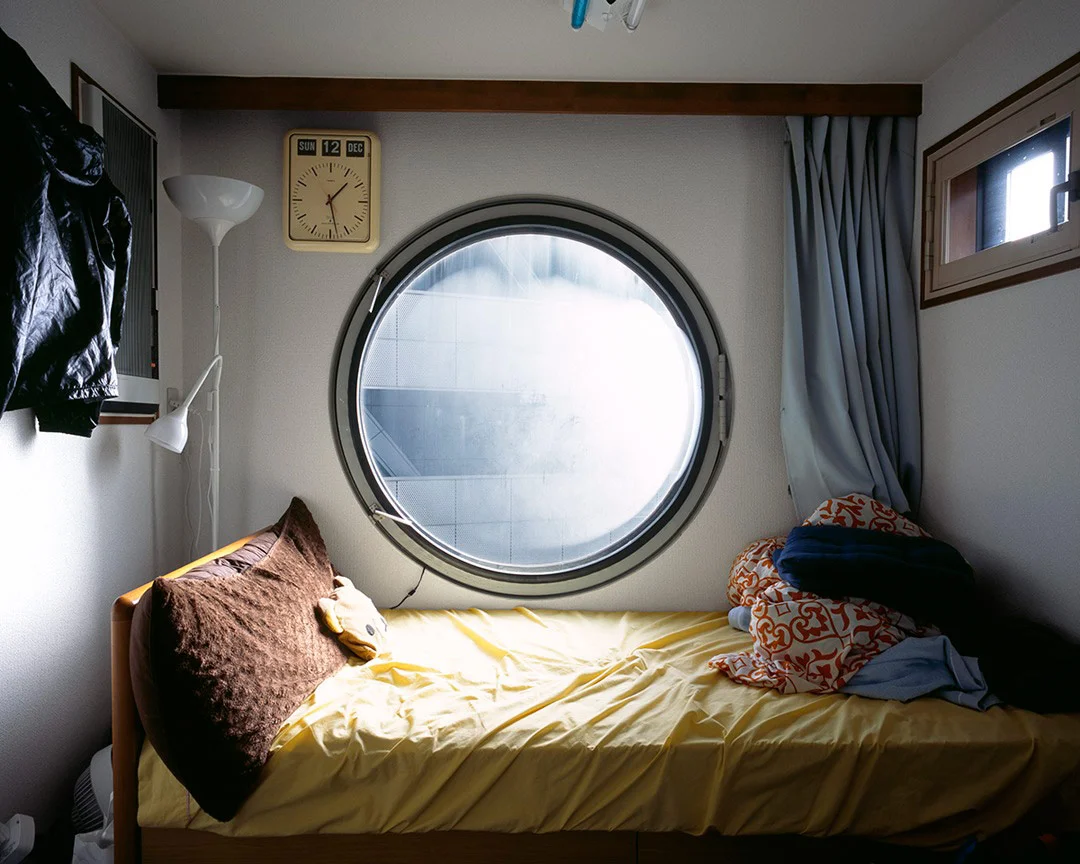
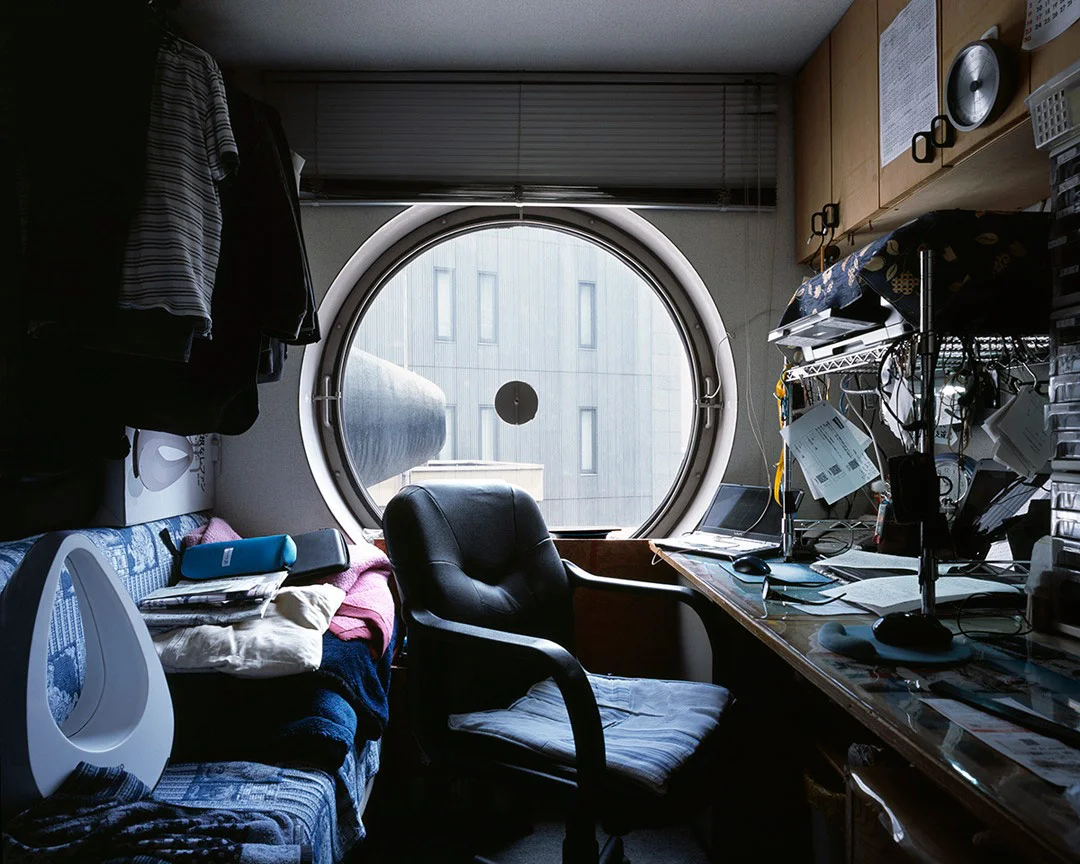
Architect Kisho Kurokawa was very innovative in his creation of the Nakagin Capsule Tower in 1972, which was the first capsule architecture design. The module was created with the intention of housing traveling businessmen that worked in central Tokyo during the week. It is a prototype for architecture of sustainability and recycleability, as each module can be plugged in to the central core and replaced or exchanged when necessary.

Built in the Ginza area of Tokyo, a total of 140 capsules are stacked and rotated at varying angles around a central core, standing 14-stories high. The technology developed by Kurokawa allowed each unit to be installed to the concrete core with only 4 high-tension bolts, which keeps the units replaceable. Each capsule measures 4 x 2.5 meters, permitting enough room for one person to live comfortably. The interior space of each module can be manipulated by connecting the capsule to other capsules.

All pieces of the pods were manufactured in a factory in Shiga Prefecture then transported to the site by truck. The pre-assembled interior features a circular window, built-in bed and bathroom, and is furnished with a TV, radio and alarm clock. Hoisted by a crane, the capsules were inserted in the shipping containers by use of a crane, and then fastened to the concrete core shaft.

20041186969_3ea964a5e4_b.jpg

The hot water to the building was shut off in 2010.

The capsules can be individually removed or replaced, but only at a cost: in 2006 when demolition was being considered, it was estimated that renovation would require around 6.2 million yen per capsule. 80% of the capsule owners must approve demolition, which was first achieved on April 15, 2007. A majority of capsule owners, citing squalid, cramped conditions as well as concerns over asbestos, voted to demolish the building and replace it with a much larger, more modern tower. In the interest of preserving his design, Kurokawa proposed taking advantage of the flexible design by "unplugging" the existing boxes and replacing them with updated units.

I’m never going to have a perfect relationship by Richard

I used to be married, now I have a relationship with my iPhone. I’ve concluded that my time with my phone is affecting everything from my memories and attention spans to my creativity, productivity, relationships, stress levels, physical health, and sleep.

The point is simply to have a clear sense of what a healthy relationship looks like, enjoying the kids, I mean the social media Apps, and live your life.

I’m never going to have a perfect relationship with my phone, like with my wife, I must divorce. I will probably never be married again and I sell my Apple shares.

Have to go now, there is an incredible view ahead of me and no reception here…

When you change the way you look at things, the things you look at change by Richard

Social responsibility must be the company's second most important focus, after revenues, not just cheap talk.

Last week Apple announced that it will build its new MacBook Air and Mac Mini computers using “100 percent recycled aluminum”. Its good BUT aluminum is just about the easiest metal to recycle, and there’s tons of it already on the market. In fact, most of the aluminum Apple uses is probably already recycled.

Facebook is detrimental to global discourse, has harmed democracies around the world, and, because of its dependence on advertising, has responded to criticism by making only minor, cosmetic changes. Mark Zuckerberg and his team will continue to allow the social network to be a haven for fake news, hoaxes, threats, and much, much worse.

Facebook has had several opportunities to show that it understands its responsibility as the world’s largest social network , a platform that now has 2.23 billion active users worldwide. China is already the second-largest ad market for the company, $5 billion in total and growing fast.Facebook make money from each of us, a lot of money. In 2017, each U.S. user was worth $20.21.

Ones you realized your life would be better without Facebook, Instagram, Messenger and WhatsApp, until you realize, it’s harder than ever to quit, because now Facebook makes saying goodbye a long-drawn out affair. Now takes a full month to delete your Facebook account , twice as long as before. And don’t expect Facebook to put your data in the trash bin.

Socially responsible tech companies should take the dictum “Do No Harm” as a primary operating principle governing every aspect of their business. This means not only doing everything to prevent pollution and physical harm from its technologies, but also preventing harm to mental health and well-being for individuals and the society.

We cannot continue to dump the latest great creations on the world and afterwards clean up their worst aftereffects.

ITarb.PNG

Size matters by Richard

A fancy pink diamond of 19 carats, previously owned by the Oppenheimer family, known as the Pink Legacy diamond, was sold to Harry Winston for 50.4 million Swiss francs this Nov. in Geneva.

The word diamond derives from the Greek word ‘adamas’ meaning indomitable and invincible. Diamonds are the hardest natural substance known to man. They are 58 times harder than the next hardest mineral on Earth. A ring has the symbolism of life and eternity and was first used in Roman times as a public pledge of marriage between a couple. These were later adorned with diamonds because of their own remarkable significance. The role of the diamond has today entered new dimensions. But it still retains its unique significance as a symbol of commitment.

pink.jpg

Well, money cannot buy love and love cannot buy money, but money increases the chances of love and love decreases the need for money.

But for sure this pink beauty will certainly be someone’s best friend…

The 100 most substantive solutions by Richard

An ambitious plan to leverage existing solutions to global warming is short on analytic rigor

Companies need to be an integrated part of our society in order to succeed. Don't work for your shareholders, work for your stakeholders. We are responsible together. Paul Hawken's influential books could shaped corporate sustainability. Also there’s been no real way for ordinary people to get an understanding of what they can do and what impact it can have.

Summary of Solutions by Overall Rank
We know we can’t avoid the cataclysmic impacts of global warming by only focusing on achieving zero net carbon emissions; we must also rapidly re-sequester carbon
— Paul Hawken

15 years ago, in a landmark article in Science Magazine, Princeton professors Stephen Pacala and Robert Socolow wrote, “Humanity can solve the carbon and climate problem in the first half of this century simply by scaling up what we already know how to do.

If Paul is successful in launching a social movement around the ambitious ideas described, could inspire the wider research community to take on more visionary scenarios, an outcome that could in turn help advance the project’s overall objectives.

Supporting children with dyslexia by Richard

Fascinated to read a report which says the skills dyslexic people have such as problem solving and storytelling could help companies meet the challenges of business in the future. The report delves into how the world of work is changing fast and how a revolution in skills is needed.

We should be supporting children with dyslexia to realise their potential, starting at school and running right through to the world of work.

5 national parks from donated land by Richard

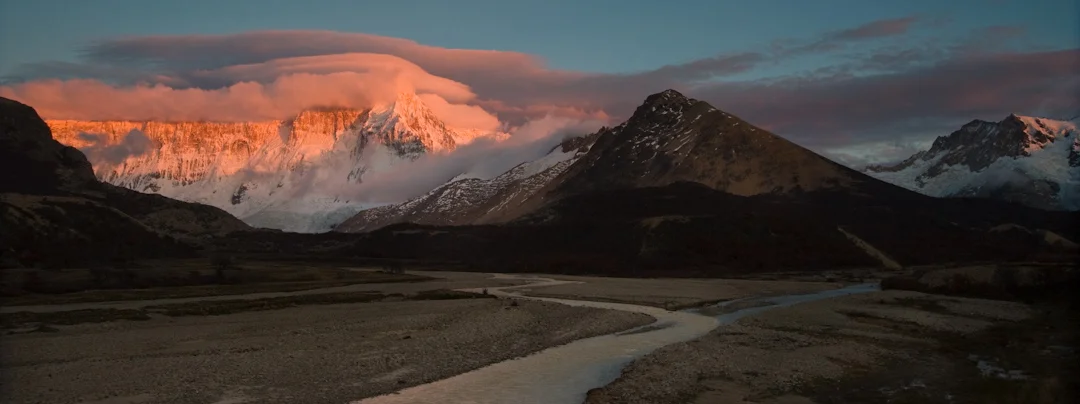
This Monday, Chilean president Michelle Bachelet announced the major expansion of parklands that will preserve the rainforests and grasslands in the area. Over one million acres donated by American philanthropists will join the Chilean government’s nine-acre contribution that was federally owned. National parks in Chile will represent just over 80 percent of the country’s protected areas.

North Face, Inc. was founded 50 years ago by Doug and Kristine Tompkins who also spent 25 years acquiring land in Patagonia to conserve it, today Tompkins Conservation. Doug and Kristine invested in the future of everybody. It's rare to see wealthy people being so generous and smart.

It’s the largest private land donation in the world and is equivalent to triple the Yellowstone and Yosemite parklands if they were combined. Pumalin National Park and Patagonia National Park Chile existed under the Tompkins Conservation umbrella. Two other parks and a national reserve will be expanded.

pat.jpg

A 1,700-mile route, located between Puerto Montt and Cape Horn

Chile hopes to link all 17 of their national parks into a long 1,500-mile tourist passageway. The entire park system could bring in $270 million annually for the country and it could create 43,000 job opportunities. Bachelet has also completed negotiations with Easter Island to protect 720,000 square kilometers of the Pacific Ocean. Route of Parks Figures:

  • 17 National Parks

  • More than 60 communities

  • 1,700 miles, spanning from Puerto Montt to Cape Horn

  • 3 regions of Chile: Los Lagos, Aysén, and Magallanes

  • Over 28.4 million acres protected

  • 91% of the territory is categorized as national parkland

  • 140 species of birds

  • 46 species of mammals

National Parks Within the Route of Parks:

  1. Alerce Andino National Park

  2. Hornopirén National Park

  3. Pumalín National Park – Douglas R. Tompkins

  4. Corcovado National Park

  5. Melimoyu National Park

  6. Queulat National Park

  7. Isla Magdalena National Park

  8. Laguna San Rafael National Park

  9. Cerro Castillo National Park

  10. Patagonia National Park

  11. Bernardo O´Higgins National Park

  12. Kawésqar National Park

  13. Torres del Paine National Park

  14. Pali-Aike National Park

  15. Alberto de Agostini National Park

  16. Yendegaia National Park

  17. Cabo de Hornos National Park

I sincerely hope this selfless gesture will inspire others. Certainly, today North Face belongs to VF Corporation, a $2.8B revenue multinational, but as an extensively travelling photographer, I will continue do use brands like the North Face and Patagonia, for more than one reason.


Douglas Tompkins documented in the film Mountain of Storms, the trip solidified Doug’s place as rock climbing legend. In the early 1990s, Doug sold his part of Esprit and moved down to Chile to do conservation work full time with his wife, Kristine McDivitt Tompkins, the former CEO of Patagonia, Inc. Together, over the last 25 years, Doug and Kris have protected 2.2 million acres, more land than any other individuals.

Costa Rica has just run on 100 percent renewable energy for 300 days. by Richard

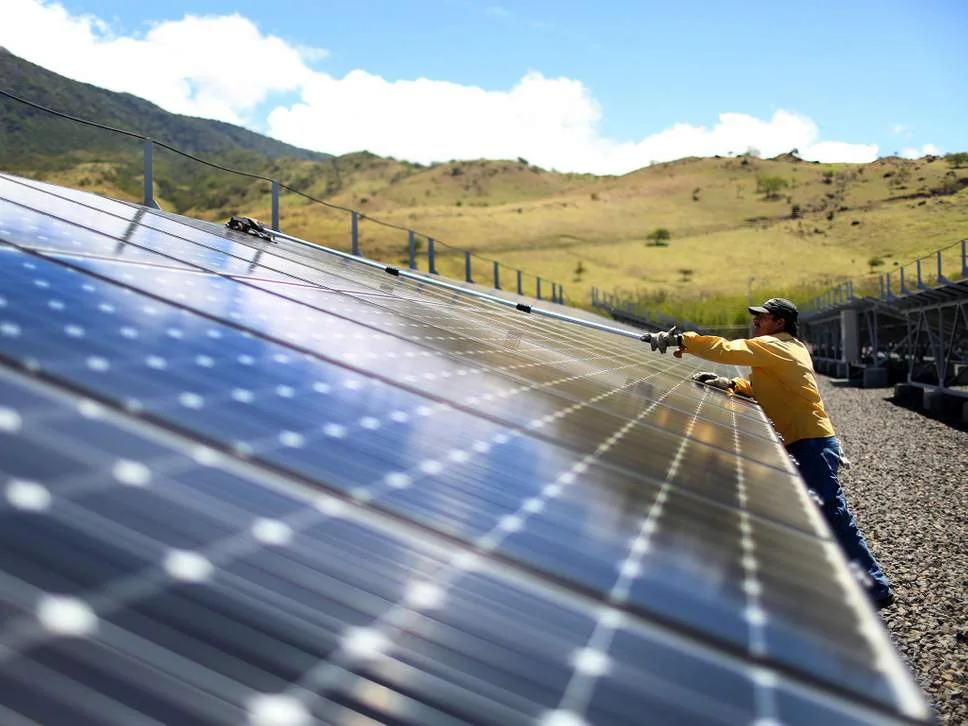
Back in 2015 it managed to generate 100 per cent of its electricity from renewable energy sources for 299 days, and in 2016, it ran for 271 days on everything but fossil fuels. Now, it appears that Costa Rica has done it again. The small country has purportedly run for a whopping 300 days solely on a mixture of hydro, geothermal, wind, biomass and solar energy.

According to a recent report from the Costa Rican Institute of Electricity, the nation has just bested its 2015 achievement and has run for 300 days solely on renewable energy sources.

Costa Rica hosts more than five per cent of the world’s species biodiversity despite a landmass that covers 0.03 per cent of the planet. 

While dams provided the majority of the country’s electricity, they can have destructive environmental and social consequences, such as affecting previously healthy rivers, disrupting wildlife and displacing indigenous communities.

"The story could have been different. It could have been the story of any developing country that goes for the short-term option. I think the underpinning rationale that shaped some of the decisions that now have paid off – for example, non-fossil fuel electricity generation, the creation of national parks – was the ability to think in the long term."

That long-term view is exactly what the rest of the world needs to think about right now, with CO2 emissions and global temperatures still steadily rising towards an uncertain future.

CRS.jpg