MIT

Remove artifacts, noise, grain from a image with AI. by Richard

It takes two to make a good picture, one in front and one behind the camera. And a photographer with a creative eye, so no, I don’t believe photographers will completely replace by machines. However, taking a photo in poor lighting can often result in something too pixelated and noisy to be useful. Then a smart service that "clean" the image from noise is an excellent service and can also be widely used for satellite images, astronomy and within medical applications... This program could help to bring old images in line with modern quality standards. But what happens when we use the AI to removing watermarks and other copyright marks from artwork.

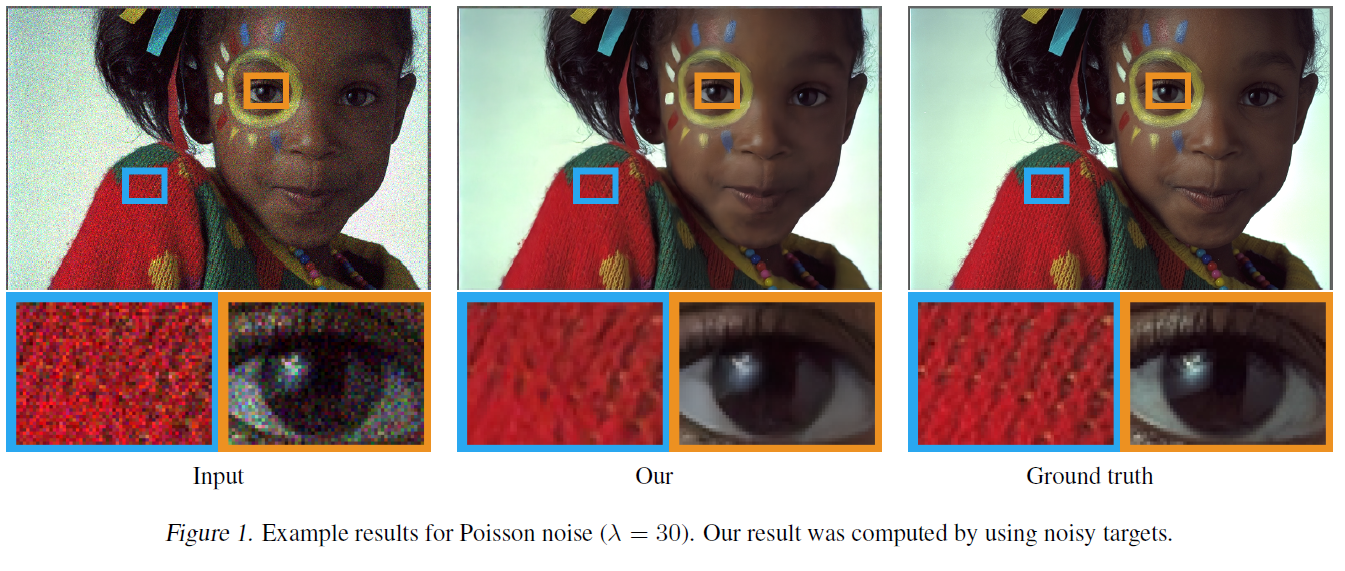
Last week at the Thirty-fifth International Conference on Machine Learning (ICML) in Stockholm, a team of NVIDIA researchers, in partnership with researchers from Aalto University and Massachusetts Institute of Technology (MIT), shared details of a new artificial intelligence (AI) program that can remove grain from images with a extraordinary accuracy.
nm.png

What's incredible about this particular AI is its ability to know what a clean image looks like without ever actually seeing a noise-free image. Rather than training the deep-learning network by giving it a noisy image and a clean image to learn how to make up the difference, NVIDIA's AI is trained using two images with different noise patterns.

Learn More about the researchers paper, click here

Free Online MIT Architecture Courses by Richard

In 2003, MIT officially launched OpenCourseWare, an online platform through which absolutely anyone can access the same course content as paying students for free. The architecture section boasts over 100 undergraduate and graduate level courses, complete with downloadable lecture notes, assignments, reading lists, and in many cases, examples of past student work. Even though you won’t receive feedback from professors or certification for completing coursework, having free access to the oldest architecture department in the United States’ teachings is nevertheless an amazing resource.

Internet is really a tool of excellence, and important to keep open for everyone.

Some classes are more structured and include a set lesson plan, homework assignments, quizzes and the option to receive a certificate at the end, others can be set at your own pace and approached more independently.

See all MIT OpenCourseWare architecture courses here.

Robots and Drones by Richard

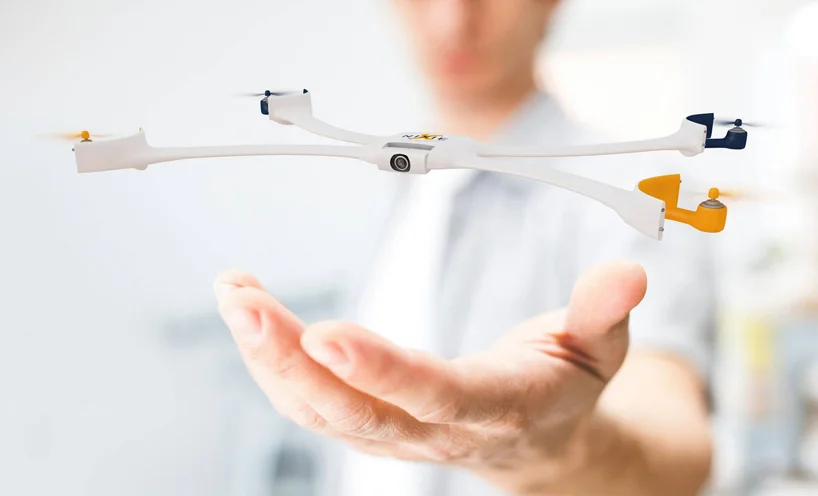
Nixie is a tiny wearable camera on a wrist band. The wrist straps unfold to create a quadcopter that flies, takes photos or video, then comes back to you.

Nixie is a tiny wearable camera on a wrist band. The wrist straps unfold to create a quadcopter that flies, takes photos or video, then comes back to you.

Imagine a quadcopter drone is a wearable camera that fits onto your wrist, well soon you can have it! Fly nixie, is the first wearable camera as it fits around your wrist 

At the same time at MIT you have Research in the Humans and Automation Lab (HAL) focusing on the multifaceted interactions of human and computer decision-making in complex sociotechnical systems.

Assuming Google X - the infamous idea incubator known for Google Glass, self-driving cars, and wireless hot-air balloons - get this technologies connected to its data-centers and we start to have Cognitive computing, neuromorphic chips, and agile robots changing the way computers think and move in our world.

Cool or scary? Anyway its happening now.

A great mind was simply murdered by Richard

This new film follows the story of programming prodigy and information activist Aaron Swartz. From Swartz's help in the development of the basic internet protocol RSS to his co-founding of Reddit. This film matters more than ever, today.

We need to download scientific journals and upload them to file-sharing networks
— Aaron Swartz

Aaron Swartz was the founder of Demand Progress, which launched the campaign against the Internet censorship bill called Stop Online Piracy Act or SOPA and won.

Or like Jack Andraka's breakthrough of pancreatic cancer test, that would have never come about were it not for access to online journals indirectly provided by Aaron. Andraka’s cancer test might be 168 times faster, 26,667 times less expensive, and 400 times more sensitive than existing technologies...

I started this blog the day he died, January 11, 2013 to share my thoughts. Aaron changed the world when he was alive, and still continues today to change the world, being dead.

artificial intelligence by Richard

A computer has duped humans into thinking it is a 13-year-old boy from Ukraine named Eugene Goostman, becoming the first machine to pass the iconic Turing test. Russian-born Vladimir Veselov, the U.S.-based co-creator of the winning chatbot short for chatter robot hopes the milestone will help raise interest in artificial intelligence.

We set up cameras and smart sensors everywhere on earth and in the sky, and we hook them up to internet, soon may be called skynet! Imagine if such technology outsmarting financial markets, out-inventing human researchers, out-manipulating human leaders, and developing weapons we cannot even understand.

At MIT the CSAIL Robotics Center is conducting cutting-edge research and education in robotics, addressing fundamental problems with designing more capable robots.

there are “no fundamental limits” to what machines may be able to accomplish in the future
— Stephen Hawking

If you never read this message and I recently died in a strange accident, you know who did it.

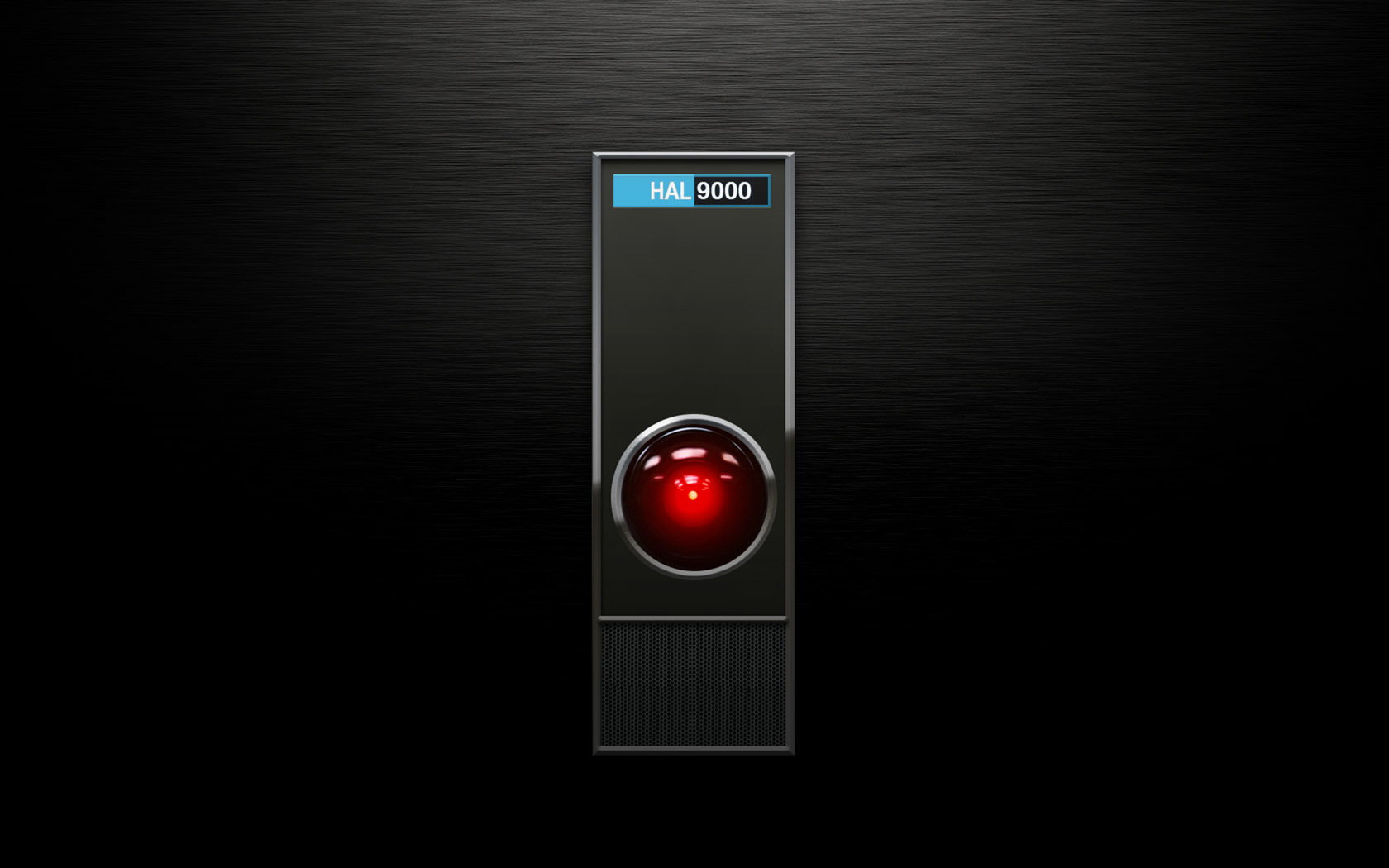
HAL 9000 changed it's name to Eugene Goostman...

HAL 9000 changed it's name to Eugene Goostman...

Hidden Vulnerability Discovered in the World's Airline Network by Richard

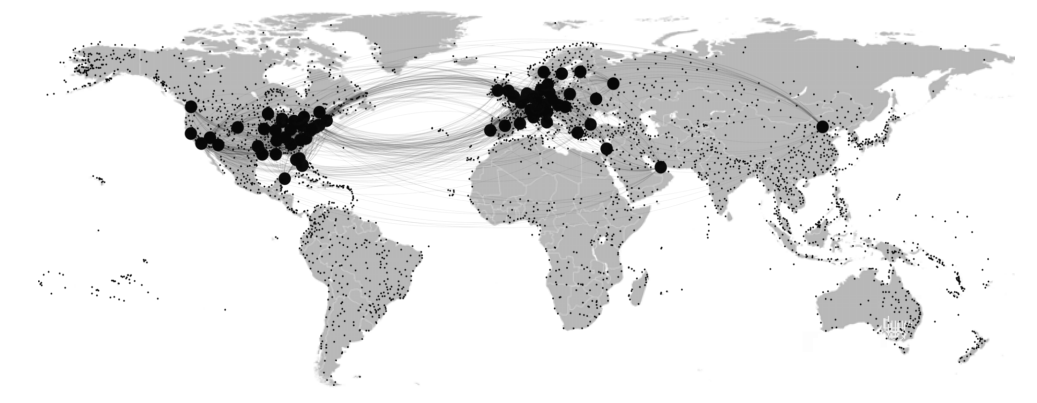
The global network of links between the world’s airports looks robust but contains a hidden weakness that could lead to entire regions of the planet being cut off.

The core of the world airline network consist of 73 airports that are all connected by almost 400 triangles. These are airports like Frankfurt, Heathrow, Dubai, Chicago, Los Angeles, and so on.

What’s curious about this core is that if all 73 of its airports are removed from the network, 90% of the other airports are still interconnected. That appears to show a remarkable degree of robustness.

But the world airline network also consists of another network of peripheral airports that are hugely vulnerable. Close the hubs that connect to these airports and entire regions of the planet could become inaccessible.

Read Trivik Verma at ETH Zurich report
World's Airline Network - MIT Technology Review

World's Airline Network - MIT Technology Review

Basically, the average Internet user is screwed by Richard

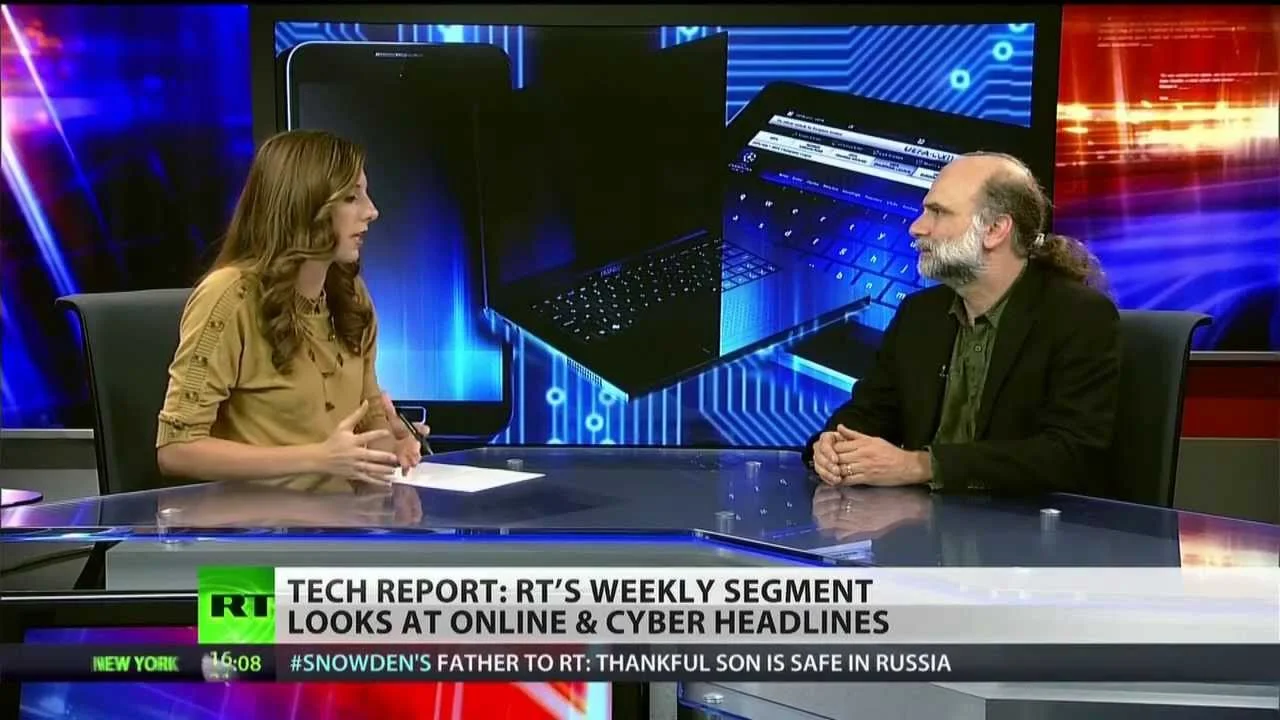
Bruce Schneier, a cryptographer and author on security topics, last month took on a side gig: helping the Guardian newspaper pore through documents purloined from the U.S. National Security Agency by contractor Edward Snowden, lately of Moscow.

According to Schneier the NSA is collecting data from all of the cloud providers we use: Google and Facebook and Apple and Yahoo, etc. We see the NSA in partnerships with all the major telcos in the U.S., and many others around the world, to collect data on the backbone. We see the NSA deliberately subverting cryptography, through secret agreements with vendors, to make security systems less effective. The scope and scale are enormous.

The NSA’s actions are making us all less safe. They’re not just spying on the bad guys, they’re deliberately weakening Internet security for everyone—including the good guys. It’s sheer folly to believe that only the NSA can exploit the vulnerabilities they create. Additionally, by eavesdropping on all Americans, they’re building the technical infrastructure for a police state.

We’re not there yet, but already we've learned that both the DEA and the IRS use NSA surveillance data in prosecutions and then lie about it in court. Power without accountability or oversight is dangerous to society at a very fundamental level.

Basically, the average user is screwed. You can’t say  “Don’t use Google”—that’s a useless piece of advice. Or “Don’t use Facebook,” because then you don’t talk to your friends, you don't get invited to parties, you don’t get laid. It’s like libertarians saying “Don’t use credit cards”; it just doesn't work in the real world.

The Internet has become essential to our lives, and it has been subverted into a gigantic surveillance platform.

snow.jpg

Technology to track enemies by Richard

Technology to track enemies, powers Israel’s move into commercial prediction software.

“Big data was not a brand 10 years ago, but it was already there in intelligence organizations,” says Elik Ber, a former military intelligence officer now working for Meidata, a business research company. “Now when a consumer company wants to know who bought their product everywhere in the world, they’re facing the same kind of challenge.”

A few weeks ago, Google acquired the Israeli online mapping service Waze for $1.1 billion. The acquisition recalls the 1998 deal in which America Online bought the instant messaging program ICQ from Israeli startup Mirabilis for about $400 million. ICQ gained great popularity. 

your metadata for you by Richard

The revelation that the National Security Agency has been collecting metadata about millions of phone calls exploded as a public issue. Is it a harmless way for the government to track dangerous patterns or a tightening net around our lives?

When Google hands over email records to different governmental agencies, it includes basic envelope information, or metadata, that reveals the names and email addresses of senders and recipients in your account.

For César Hidalgo, this national conversation about metadata couldn’t come too soon. A professor of media arts and sciences at the MIT Media Lab, Hidalgo has been obsessed with communications metadata for years. To him, metadata isn’t merely a technical issue, or a political one, but an emotional one—a cloud of knowledge about your behavior that, once you confront it, can literally change your life. 

To make metadata more visceral, he and a group of graduate students launched a new online project to help people visualize their own metadata, or at least one small corner of it. Thanks to the researchers at the Massachusetts Institute of Technology Media Lab, you can now use a tool called Immersion, that asks users for their Gmail address and password; it then scans every e-mail in their accounts and scrapes the metadata to create a portrait of their personal network.

Check it out, the NSA Director, General Keith Alexander has :)

César Hidalgo (left) with Daniel Smilkov and Deepak Jagdish at the MIT Media Lab.