Mason jars are good for just about anything.
Life on Earth, as you know it, would be impossible without the humble fungi. In the beginning, fungi played an essential role in the development of our oxygen-rich atmosphere by mining phosphorous from the rocks and transferring it to plants to power photosynthesis. So, without fungi, your life as a human wouldn’t be possible.
Also, fungi decompose practically everything that dies or decays. Without fungi, death would engulf the Earth, and make it virtually uninhabitable for you and every other living organism.
And Fungi impact your life significantly in ways you’re likely unaware of, and you probably barely notice.
Fungi and Your Food
You may not know it, but fungi figure prominently in your diet. Mushrooms are the fleshy, spore-producing, fruiting body of fungi. Typically, mushrooms grow above ground and are but a minute portion of the larger organism that grows below ground, weaving its way through the soil and among the roots of plants.
No doubt you already know you can eat mushrooms and you should since they have a plethora of health benefits.
Morels, shiitake, chanterelles, and truffles are considered delicacies. But mushrooms aren’t the only way fungi appear in your diet. Molds of the genus Penicillium ripen many kinds of cheese.
Fungi also ferment the grains and fruit to produce the beer and wine you drink, and they provide the wild yeast for bread.
Saccharomyces cerevisiae, also known as baker’s yeast, is an essential ingredient in natural sourdough bread making, a food that’s been a staple of human life for thousands of years.
Fungi and Your Health
Mushrooms fight cancer
A study in the Journal of Experimental Biology and Medicine found that all the common mushroom varieties reduced breast cancer cells by a whopping 33 percent. But breast cancer isn’t the only type of cancer mushrooms help. Studies on prostate and stomach cancer show similar results.
They’re immune-boosting and high in vitamins
Beta-glucan and lentinan are two properties found in mushrooms that give your immune system a much-needed boost. Plus, they’re high in crucial vitamins — many mushroom varieties contain high levels of vitamin D, and crimini mushrooms carry lots of B12, which makes them an excellent choice for vegetarians since B12 is most common in animal products.
Fungi as Medicine
Red yeast rice is the earliest medicinal use of fungi on record. China developed it around 800 AD. Cultivating Monascus purpura (yeast) in rice produces a pharmaceutically active mixture of compounds.
Now, millions of patients with life-threatening diseases are treated each year with medicines made from fungi. The medicinal value of fungal metabolites is a knowledge that’s centuries old.
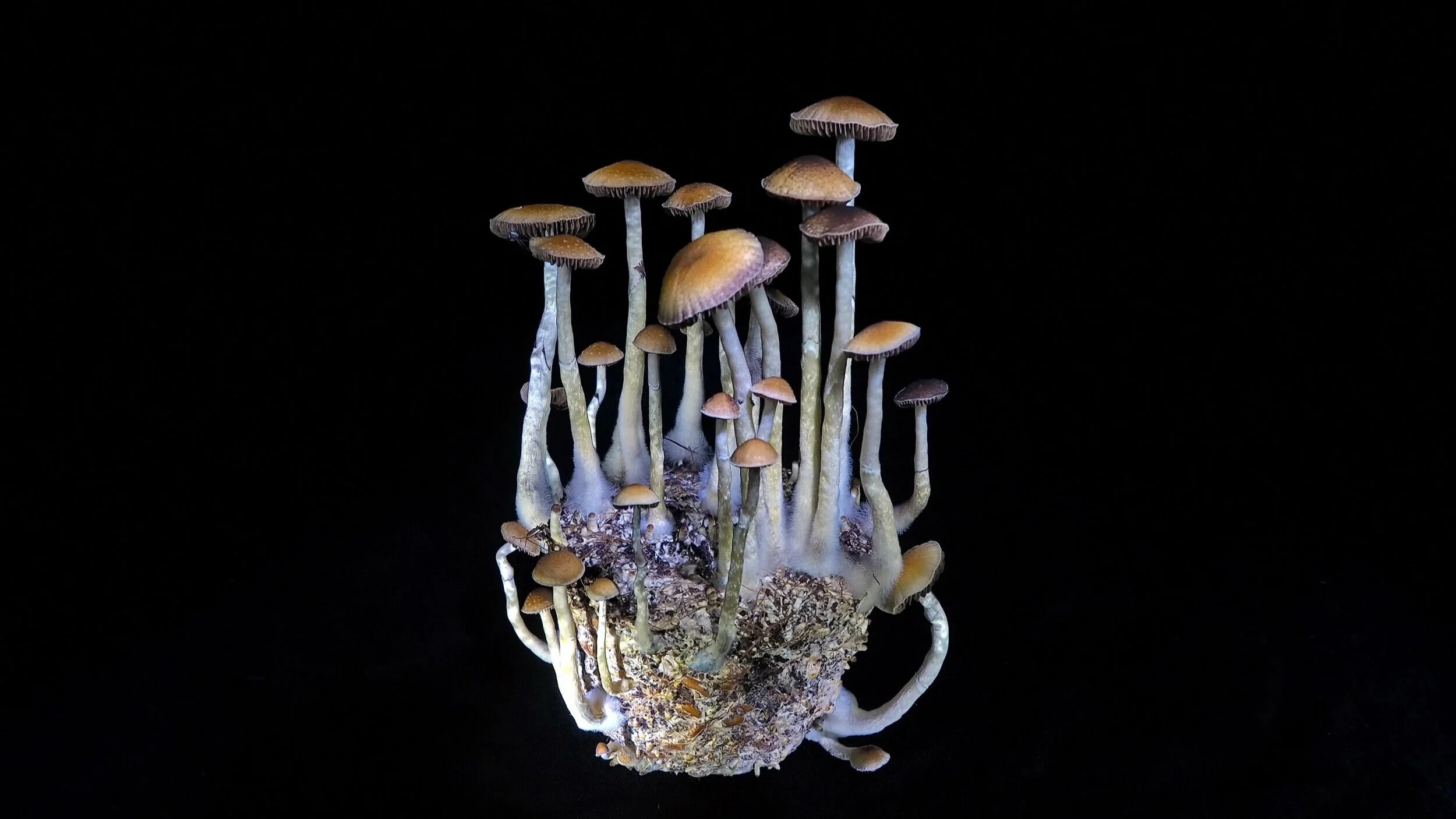
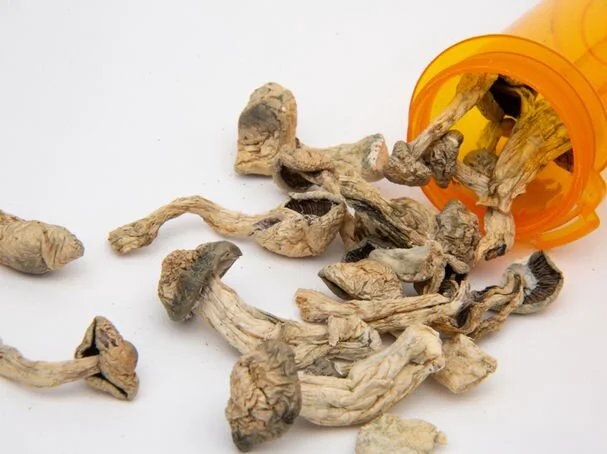
Perhaps the most potent yet controversial fungal medicine is psilocybin mushrooms, medicinal properties have also been used for centuries.
In his book, “How to Change Your Mind: What the New Science of Psychedelics Teaches Us About Consciousness, Dying, Addiction, Depression, and Transcendence,” Michael Pollan delves deep into the history of these drugs.
Pollan explains that psychedelics were once legal and used successfully in the US to treat mental disorders, including anxiety, depression, and addiction. According to Pollan, “For most of the 1950s and early 1960s, many in the psychiatric establishment regarded LSD and psilocybin as miracle drugs.”
How Magic Mushrooms Change Your Brain
Hallucinogens, like psilocybin (magic) mushrooms alter your perception, mood, and a slew of other mental processes by working their magic on your brain’s cortex. The drugs activate specific receptors called 5-HT2A receptors (2ARs) that are typically triggered by serotonin.
This cascade of neurobiological changes to your brain helps you to experience a renewed wonder at everyday things. You’ll have greater self-awareness. Your senses will be more acute so that colors appear more vibrant and sound, taste, and smell more intense. And you’ll remain focused on the present.
The positive effects remain long after the drugs have left the building. Participants reported a significant reduction in anxiety and depression after just one use.
They also mentioned experiencing a “spiritual awakening,” which was responsible for a permanent shift in their consciousness. Afterward, participants said it was easier to stay focused on the present, and they had a greater awareness of the interconnectedness of all things.
So, if you suffer from any of the aforementioned mental diseases, or you want to experience spiritual enlightenment and quiet the constant chatter in your mind, psilocybin mushrooms may be for you. And you may be wondering how to cultivate them.
Grow Em
So, now that you know the extensive benefits of fungi and their mushrooms, are you ready to grow some? The following technique works for most types of mushroom strains, but the focus of this article is on psilocybin (magic mushroom) cultivation.
Currently, it’s illegal to cultivate psilocybin mushrooms in most countries. But, right now, medical researchers are working diligently to prove the therapeutic and medical efficacy of psychedelic drugs like psilocybin, and they’ll likely be legal soon. So, you can learn the process for when they become legal. Because you wouldn’t dream of breaking the law, right?
At this point, you’re probably wondering how long this process takes. That’s a terrific question. Here’s an approximate timeline:
Spore inoculation to spore germination — within a week
Spore germination to complete colonization of the cake — about 2 to 4 weeks.
Start of fruiting cycle — approx two weeks.
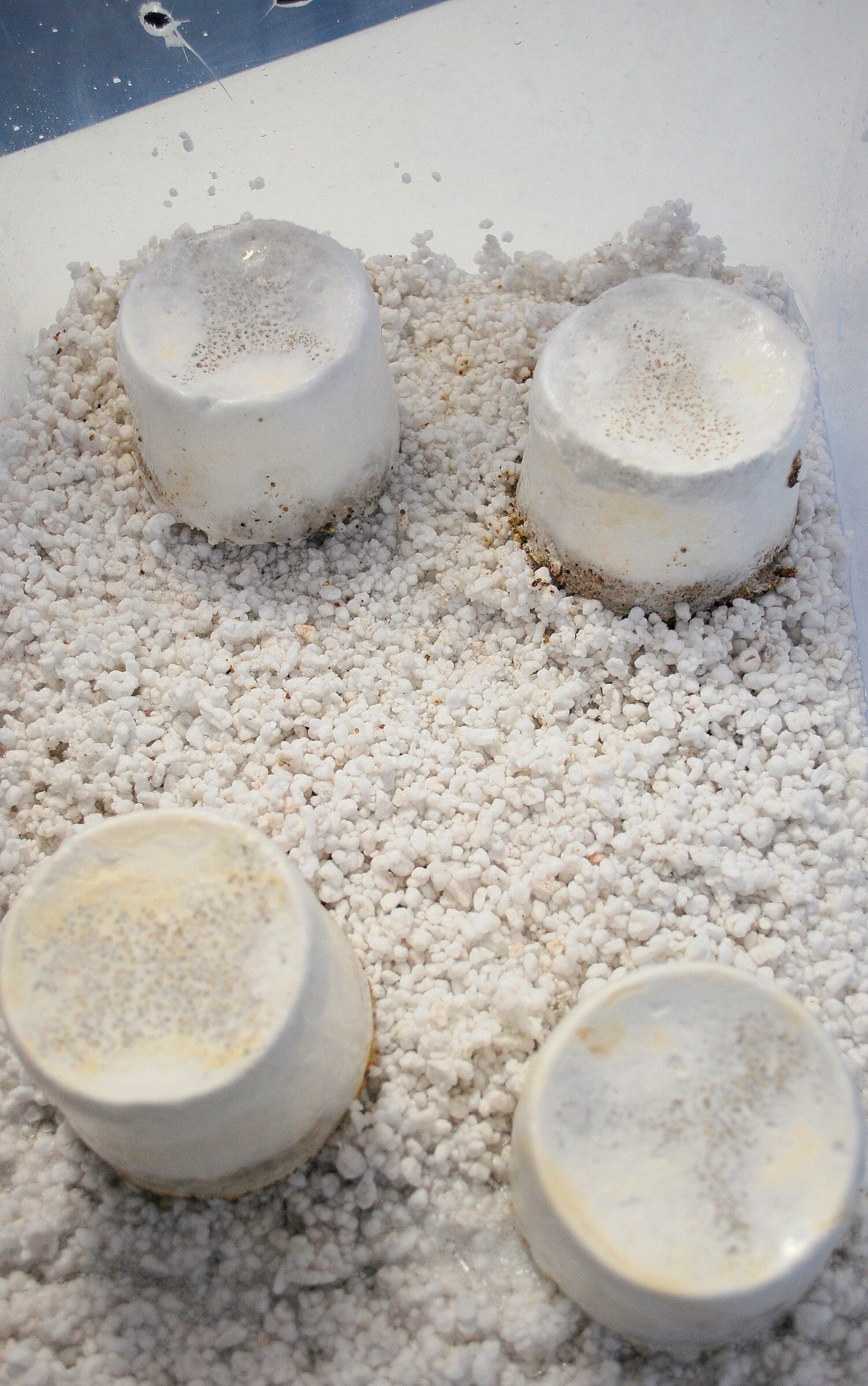
After two or so, the cakes will begin to turn blue, and no more mushrooms will form.
All in all, the process takes from 4–6 weeks from spore inoculation to fruiting.
Here’s what you’ll need:
Phase one —
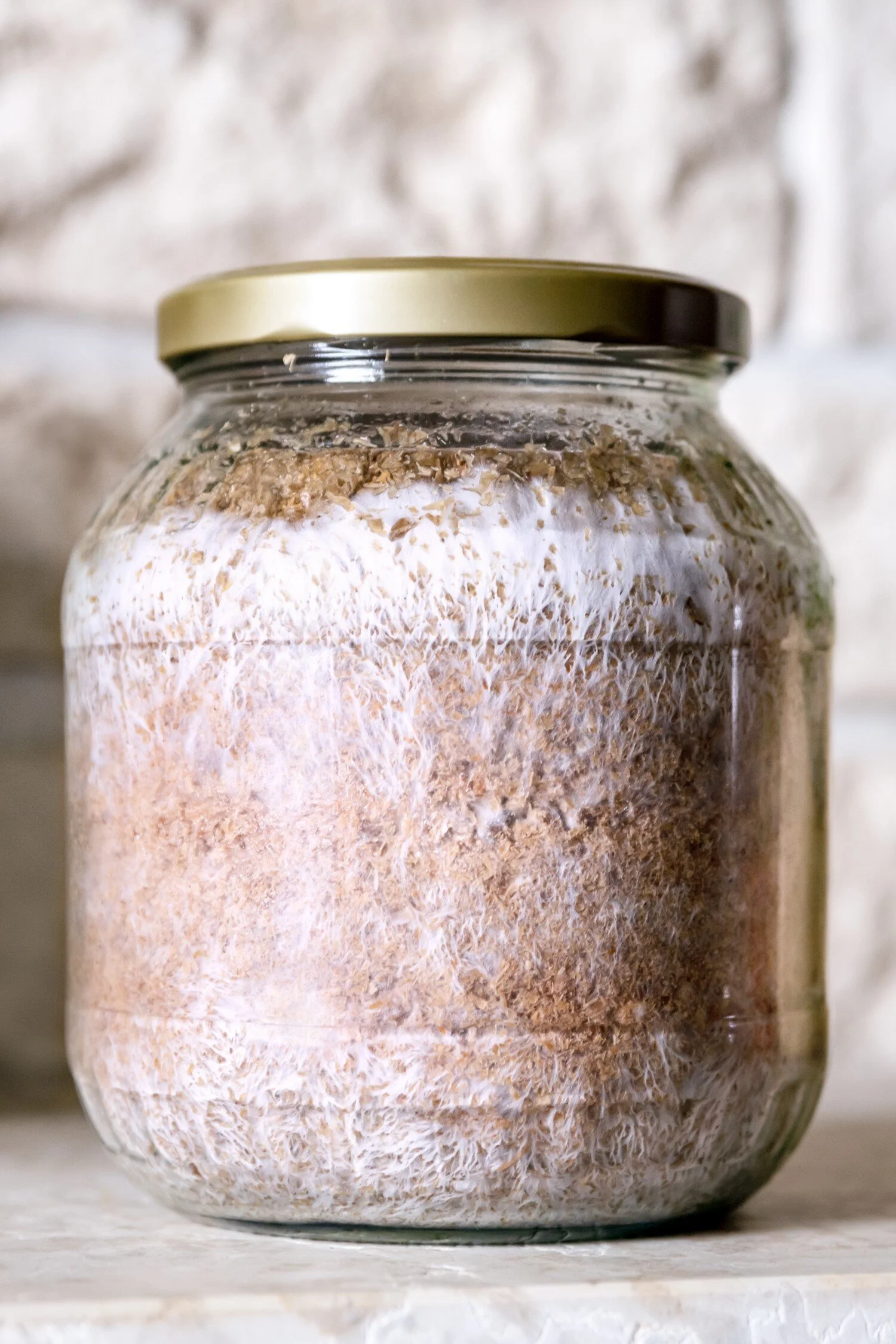
10 Sterilized inoculation jars with a substrate. Or one jar for each cc in your syringe. You can also make inoculation jars with wide-mouth mason jars and brown rice flour or another substrate. But, you’ll need to follow an intense sterilization process.
Latex gloves
Paper towels
A face mask (and thanks to COVID 19, you probably already have one of these)
Rubbing alcohol
A syringe of mushroom spores (spore syringes are available on the internet. There are some states like California, Oregon, and Georgia to which most places won’t ship. However, I did find one reliable source for those as well.
Hypodermic needles that are the correct size for your syringe. (if your syringe didn’t come with them.
A lighter
A can of disinfectant spray (like Lysol)
Phase two —
A spray bottle
A fruiting chamber — i.e., clear plastic tub with a lid
Drill four or five 1/2 inch holes on either side of your growing box so air can circulate.
A spot that receives plenty of indirect sunlight
Temperature and humidity gauge
Vermiculite (Some growers suggest Perlite. There is a difference between the two.)
3-percent hydrogen peroxide
There are four crucial aspects you’ll need to get right to reap a reward for your efforts, and they are:
Hygiene
Humidity
Light
Temperature
You’ll learn about each of these as we go through the steps. So, here goes:
Phase One
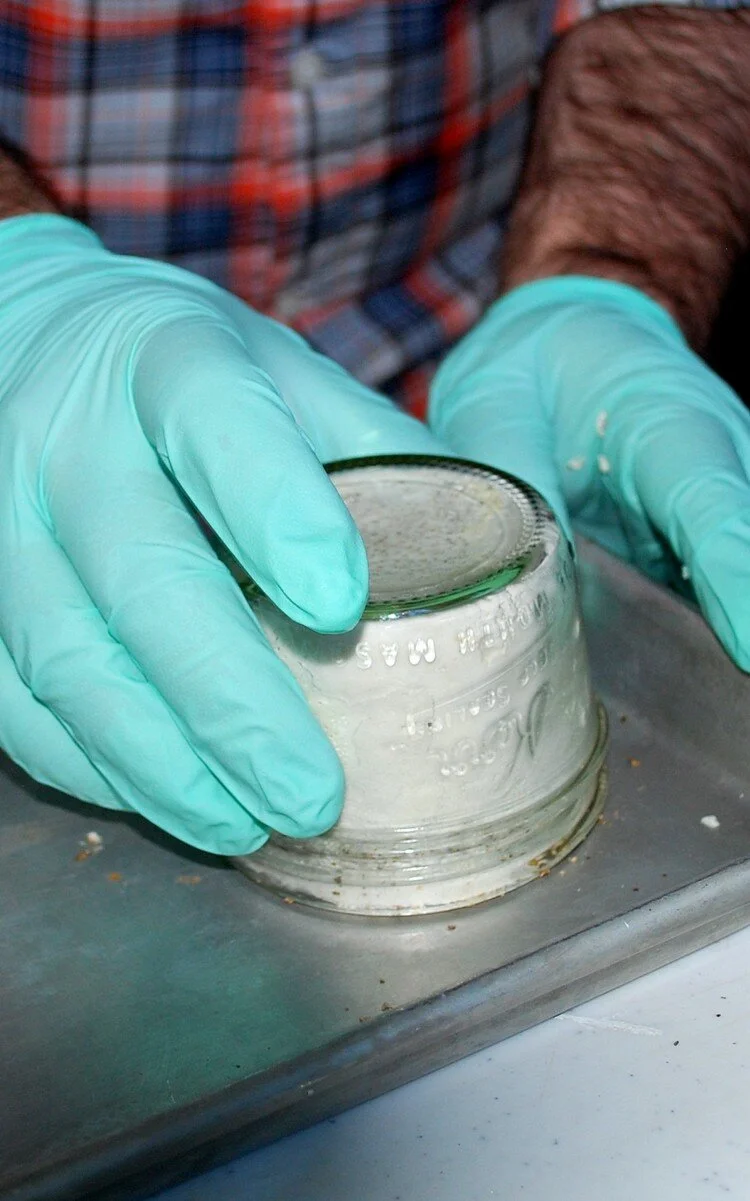
Phase one of your cultivation is where you’ll create what’s known as a birthing cake. A birthing cake is when mycelium has fully colonized your jar and wound around the substrate. When you turn it out of the mason jar, it will hold together like a cake and sprout mushrooms.
Step One: Sterilize
Enemy number one in mushroom cultivation is harmful bacteria hijacking your inoculation jars. That’s why you’re going to take the following steps to sterilize the jars and the surrounding environment. You’re trying to keep minuscule microbes from creating murderous mayhem on your spores and multiplying in your jars.
Choose a small room in your house, like a bathroom that you can use as your secret laboratory (prep space).
Gather all the items on the phase one portion of your list. Don your face mask, enter the room and close the door.
Spray the room down reasonably well with the disinfectant spray. Then put on your gloves.
Wipe your jars off with rubbing alcohol using paper towels. Pay special attention to the top of the jar.
Step Two — Inoculate
Use your lighter and heat the metal portion of your hypodermic needle until it glows red. Typically hypodermic needles come pre-sterilized, so this is merely a precaution.
After you sterilize the needle, don’t lay it down, continue to hold it until the needle cools down.
Shake your syringe to distribute the spores evenly. Insert the needle into the port and inject one cc into the jar.
Repeat with the remaining jars, sterilize your needle each time.
Step Three — Wait


![EVOLVING COMMUNITY IN OASIS uses low temperature pyrolysis to reduce waste streams while providing ... [+]Tatiana Prevezentseva, Pelikh Anna Vitalievna, Shkarupa Anastasia Aleksandrovna, Ryseva Tatiana Sergeevna, Murashko Tatiana Andreevna, and Star…](https://images.squarespace-cdn.com/content/v1/50efdebae4b06fe5ad284119/1614849676394-RYI0F9NCNYLUUSENDDGD/u7k.jpg)
![RIPPLE integrates electrochromic glass, a bioceramic dome (Geoship SPC), seed bank, solar ... [+]Matthew Lagomarsino, William Jacob Mast, Pierre-Yves Bertholet, Xiaojin Ren, Scherwyn Udwadia, Bas Kools, Israel Orellana, and Melika Tabrizi](https://images.squarespace-cdn.com/content/v1/50efdebae4b06fe5ad284119/1614849834746-HGOOU1TJVLFCS52S50F2/cfy.jpg)
![SEED symbiotic coevolution incorporates solar, geothermal, passive cooling, composting, greenhouses, ... [+]Samantha Katz , Woody Nitibhon, Henry O'Donnell, Lola Lafia, Eric Baczuk, John Hilmes, Max Schwitalla, and Colin O'Donnell](https://images.squarespace-cdn.com/content/v1/50efdebae4b06fe5ad284119/1614849924680-IC4S2BJCJ2WULNXWJAWS/vbmn.jpg)
![STARSHIP incorporates repurposed shipping containers, solar photovoltaic, water harvesting, ... [+]Alexander Dzurec, Ivan Spratte, and Tim Schwartz](https://images.squarespace-cdn.com/content/v1/50efdebae4b06fe5ad284119/1614849986502-863MGLRKBJ8347FEVBGR/%C3%B6ii.jpg)
![NEXUS explores the design capabilities of Ferrock, a sustainable alternative to concrete that ... [+]Antoniya Stoitsova, Nicolo Bencini, Ben Naudet, Avi Greene, Alex Ogata, and Tom Kendrew](https://images.squarespace-cdn.com/content/v1/50efdebae4b06fe5ad284119/1614850069155-S1KG23GCAOH7TZU0PQOE/ty7.jpg)
![THE ORIGIN POD: FROM WATER THERE IS LIFE uses atmospheric water generation technology from Source ... [+]Clara Nagy McBane, Jason Hooper, Richard Haynie, Amy Erickson, and Neil Grimmer](https://images.squarespace-cdn.com/content/v1/50efdebae4b06fe5ad284119/1614850119986-V6IKP214MNTWFE3PG502/uol.jpg)
![SOLAR MOUNTAIN uses solar photovoltaic, and recycled materials to contribute 300 MWh of electricity ... [+]Nuru Karim and Anuj Modi](https://images.squarespace-cdn.com/content/v1/50efdebae4b06fe5ad284119/1614850160393-V3RZBY40FMUVF891W9EA/etyu.jpg)