
Stockholm have been suffering unusually dry and hot weather for the past two months. It’s expected to be the longest heatwave since 1756. Sadly we're not the only place in the Northern Hemisphere with extreme temperatures since 262 years...
Authorities in Greece are dealing with the aftermath of devastating wildfires that killed at least 85 people, while efforts to control blazes in Sweden and in California continue. In Japan, 23,000 people have been taken to hospital in the past week and the weather described by officials as a “disaster”. In Algeria, a new African record has been set of 51.3C and meanwhile at the ice cap of Nordaustlandet at the north east ice cap of Svalbard...
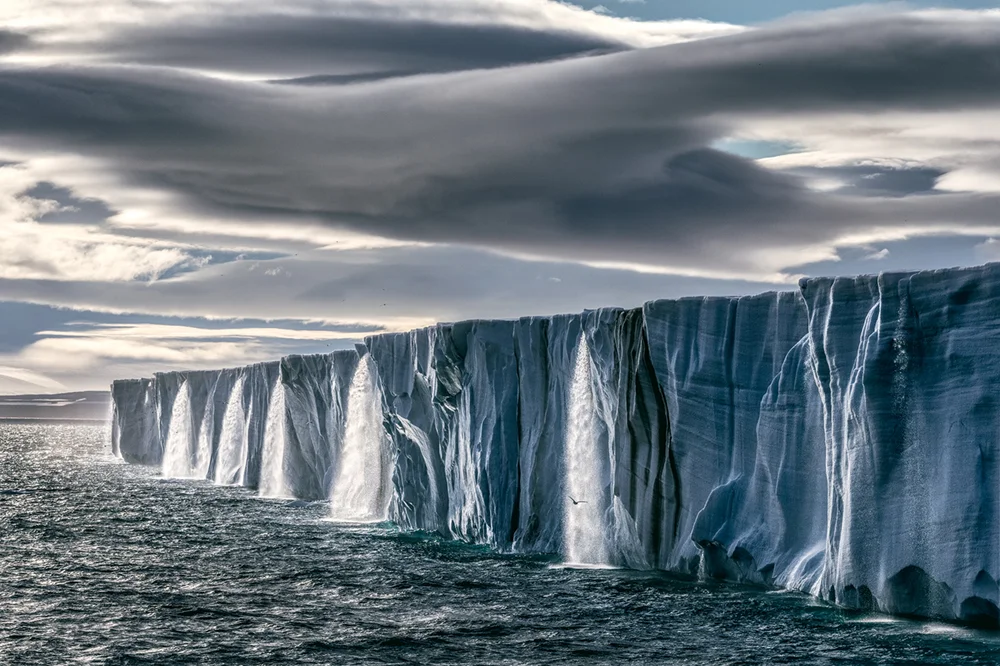
The Nordaustlandet ice cap gushes high volumes of meltwater - Photo Paul Nicklen
If there was ever a time on this site to press a red alert button if it had one it would be now. Climatologically in the Northern Hemisphere at most locations the hottest time of the year is in July into the first week of August, so even during cooler global periods prior to 1980 people experienced hot conditions during thus period of the calendar year. Adding increasing carbon pollution into the climate mix is like pouring kerosene onto a campfire making the thing explode with record heat, which indeed has happened this month.
The 2018 European drought and heat wave is a period of unusually hot weather that has led to record-breaking temperatures and wildfires in many parts of Europe during the spring and summer of 2018. It is part of a larger heat wave affecting the northern hemisphere, caused by the jet stream being weaker and further north than usual, trapping hot high-pressure air above North America, Europe, and Asia, and blocking low-pressure systems that would bring cooler air and rainfall.
Below the satellite images reveal the true extent of damage the UK’s heatwave has caused
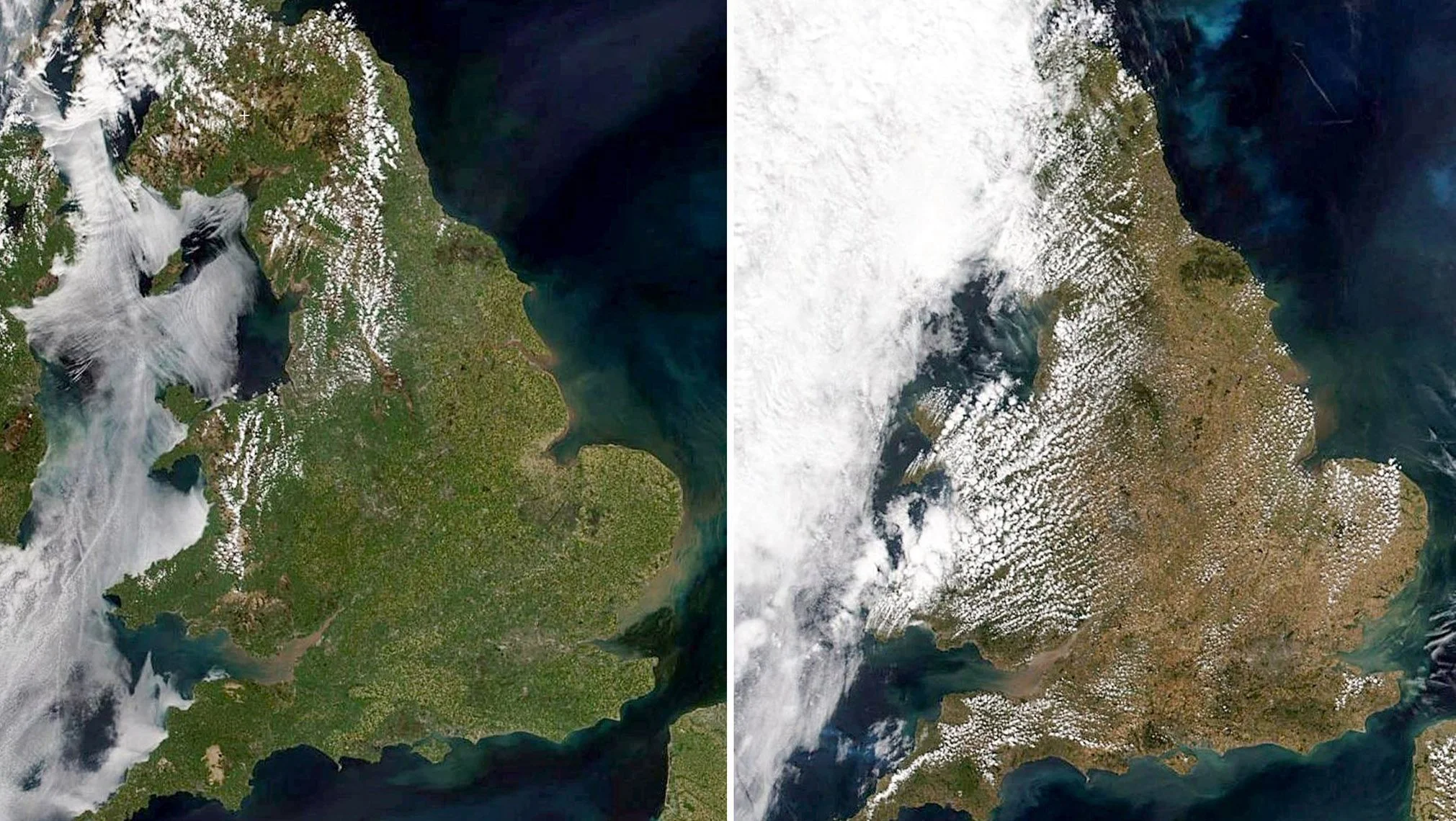
Satellite images reveal the true extent of damage the UK’s 2018 heatwave has caused.
“What is striking now is that multiple heatwaves are happening at the same time.
The key is the jet stream. This year it’s been meandering in great loops and the UK has ended up to the south of it. Add to that sea temperatures similar to previous heatwaves and climate change, the warming of the atmosphere - it all makes heatwaves more likely.”
Adapting to hotter temperatures is sensible but ignoring their causes is dangerous !
Meanwhile in California they experiance extrema weather and fires...