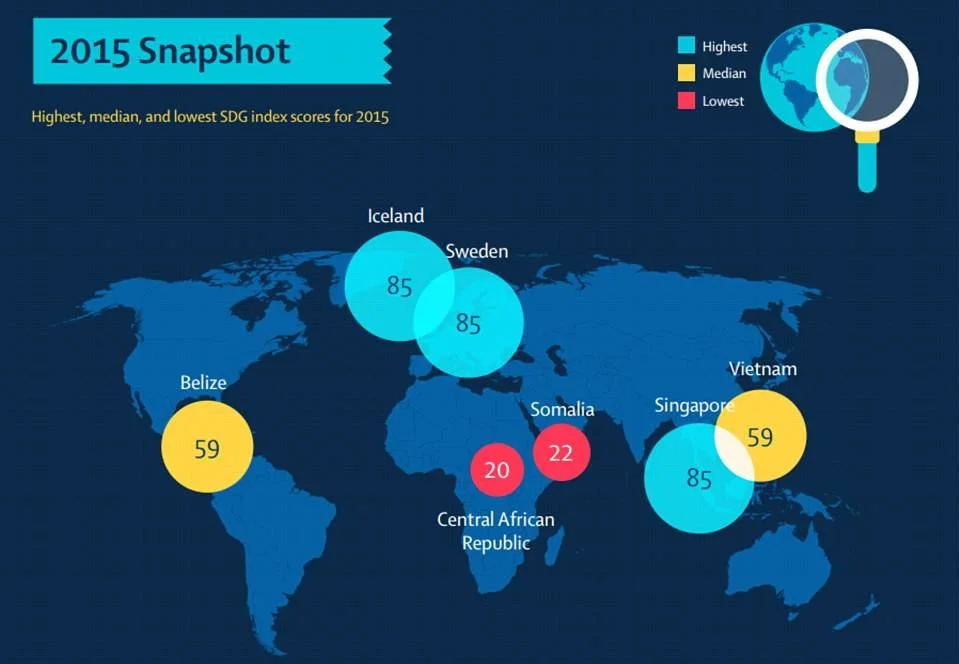
Sweden and Iceland tops a new ranking of the world’s healthiest countries, in a vast new study published in The Lancet, the study assesses 33 health-related Sustainable Development Goal (SDG) indicators in 188 countries across 25 years.
In the past 15 years, there has been significant progress across the indicators – and overall. Universal healthcare has shown the greatest improvement, followed by family planning and hygiene. There have also been reductions in deaths among mothers and children aged under five. The bad news is that on some indicators progress has actually reversed. Scores for hepatitis B, alcohol consumption and overweight children are now worse than they were in 2000.Iceland tops a new ranking of the world’s healthiest countries, in a vast new study published in The Lancet, the study assesses 33 health-related Sustainable Development Goal (SDG) indicators in 188 countries across 25 years.
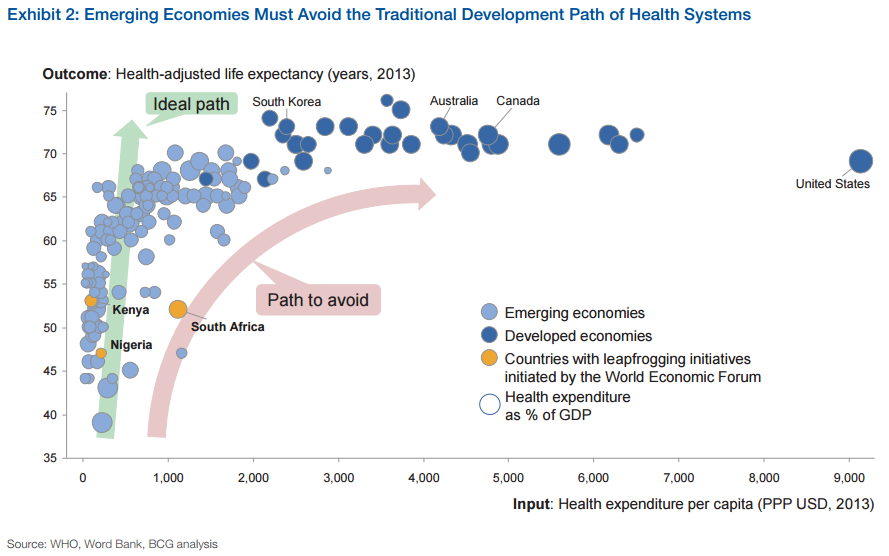
The work needed to achieve the SDGs is significant, as countries around the world look to build effective and sustainable health systems. Indeed, a World Economic Forum and Boston Consulting Group report opens by emphasizing: “Building sustainable health systems in emerging economies is one of the biggest challenges of our time.”
The report suggests ‘leapfrogging’ as a solution, as emerging economies use technology and innovation to bypass some of the traditional development stages. As the Lancet study shows in Exhibit 2, progress is needed in economies around the world, whether emerging or developed.