
Researchers at the University of Copenhagen and University of British Columbia believe they have developed a novel cancer treatment and they owe it all to malaria, a deadly parasitical condition that causes nearly 600,000 deaths a year.
In a statement on the University of Copenhagen's website, malaria expert Ali Salanti explained the research team isolated a protein used by malaria parasites to attach themselves to a pregnant woman's placenta. The protein adheres to a carbohydrate in the placenta that's indistinguishable from one found in many types of tumors.
Ali Salanti’s team is currently testing a vaccine against malaria on humans, and it was in connection with the development of this drug that he discovered that the carbohydrate in the placenta was also present in cancer tumors. Ali Salanti immediately contacted his former fellow student and now cancer researcher, Mads Daugaard, who is head of the Laboratory of Molecular Pathology at the Vancouver Prostate Center at UBC in Canada. In collaboration, the two groups have generated results, which they hope will provide the basis for a drug against cancer.
“We examined the carbohydrate’s function. In the placenta, it helps ensure fast growth. Our experiments showed that it was the same in cancer tumors. We combined the malaria parasite with cancer cells and the parasite reacted to the cancer cells as if they were a placenta and attached itself”
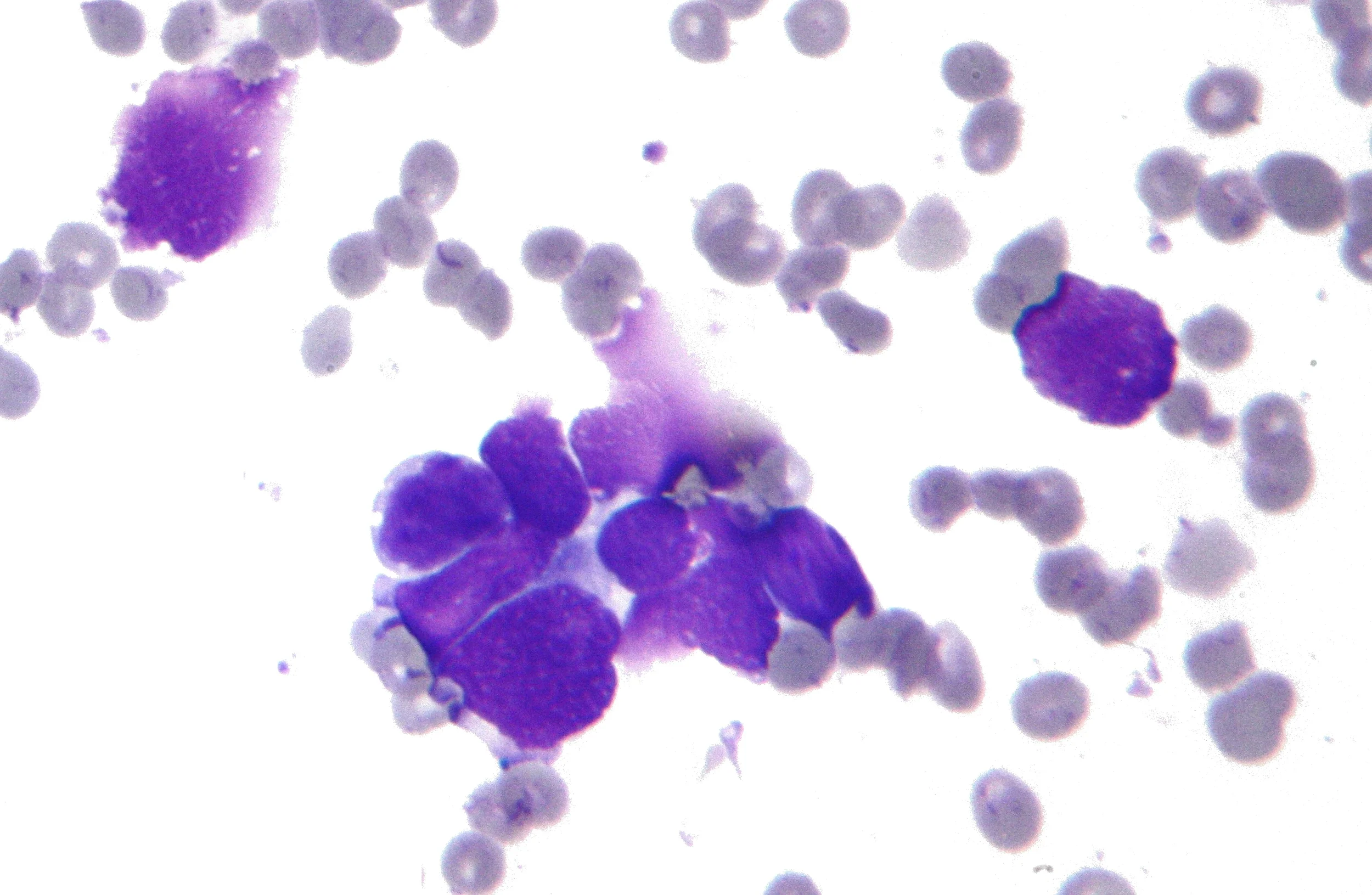
Small lung cancer cells
When the team used the protein as a delivery vehicle for a cell-killing toxin, they were able to effectively target and kill cancer cells in mice. The treatment assaulted over 90% of tumor types tested, including three varieties of human tumors that had been implanted in the rodents.
“The earliest possible test scenario is in four years time. The biggest questions are whether it’ll work in the human body, and if the human body can tolerate the doses needed without developing side effects. But we’re optimistic because the protein appears to only attach itself to a carbohydrate that is only found in the placenta and in cancer tumors in humans”